NEW ARTICLES
THE LATEST UPLOADS
Welcome to LOGBOOK magazine. We are pleased to bring you nearly quarter of a century of the best in aviation history. Although over these years we have worked with some well-known authors, we have really enjoyed working with first-time, one-time and fledgling authors, all of whom have had great stories to tell. By helping new authors get their stories in print we get to publish some unique aviation history. As LOGBOOK transitions from print to digital media, we plan on maintaining this ambition, so if you have a story to tell, feel free to drop us a line.
Presented here are some of the latest articles. Simply click on the title, and enjoy.
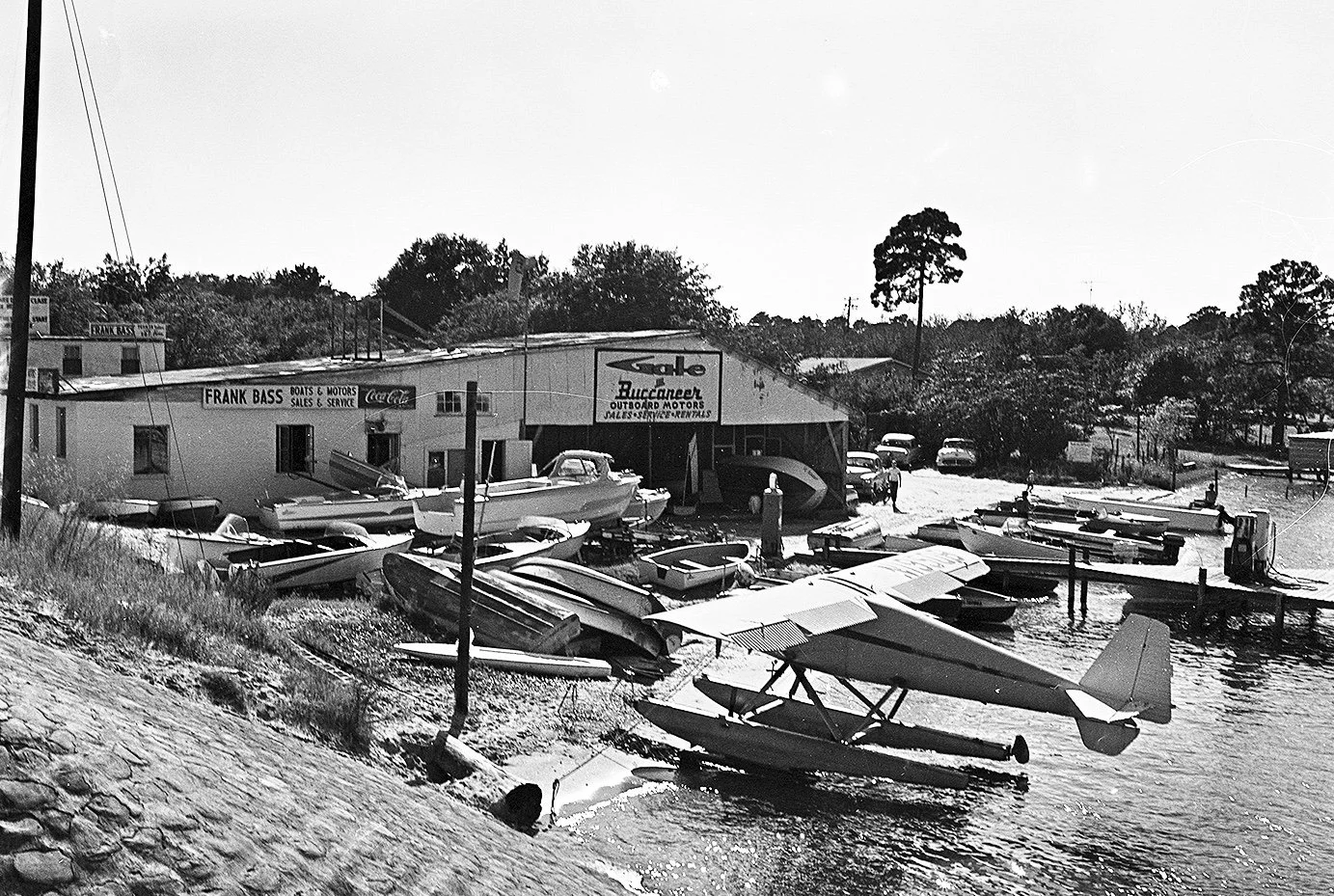
Whatever Happened to Frank Bass
by
David G. Powers
(1st Quarter 2024)
Was he simply a mild-mannered Florida business man who liked to fly around in his little Colonial Skimmer seaplane, or was he a soldier of fortune working to overthrow the dictatorship of Fidel Castro? Did Bass get wrapped up in the turmoil surrounding the assassination of Rafael Trujillo, in the Dominican Republic? Who was he working for, or was he a free agent? In any case, on 20 November 1963, Frank Bass took off from San Juan, Puerto Rico, on what should have been a routine flight, a flight that he had made several times before. He was never seen again.
1919 - 1929
by
The LOGBOOK Staff
(1st Quarter 2025)
Editor’s Note: First published on 1 July 1929, the Air Commerce Bulletin was the official publication of the Aeronautics Branch of the U.S. Department of Commerce. It took over for a previous publication called the Domestic Air News, which had been in publication since 18 December 1926. As its name suggests, the Air Commerce Bulletin was heavily weighted towards commercial aviation, although being a multi-faceted publication, it also covered almost all aspects of aviation.
On 1 January 1940, the Civil Aeronautics Authority - itself created on 22 August 1938 - replaced the Air Commerce Bulletin with a new official periodical called the Civil Aeronautics Journal. Larger in format, the Civil Aeronautics Journal would be able to present more material than the old Bulletin.
In the 15 July 1929 issue of the Air Commerce Bulletin there is a lengthy article chronicling the pursuit of trans-oceanic flight up to that point in time.
Two Tail Rotors Tales
Ask any helicopter pilot about which component of their aircraft that causes the most concern, and most will tell you it is the tail rotor system. For most helicopter designs, the tail rotor, and its tail rotor drive system, is a throughly complicated conglomeration of spinning parts, the failure of even one of the parts can spell disaster.
It should be noted that over the years the tail rotor system has proven to be incredibly reliable, and tail rotor failures are relatively rare. Still, nothing is 100%, and tail rotor malfunctions happen. Here are two stories:
Tail Rotor Failure - Ditching at Sea. Mediterranean Sea - 11 June 1973
by
Jim Palmquist
“You Will Have A Green Deck When You Get Here.” Mediterranean Sea - 1985
by
David G. Powers
A Butterfly Afternoon
by
K. E. Bevier
There is an exotic branch of mathematics called chaos theory. One prediction of this theory is that tiny vortices from a butterfly’s wings in Africa, could evolve into a hurricane in the Gulf of Mexico.
The sudden death of a vivacious, twenty-five year old Canadian nurse, most probably the only woman to die in an airplane during World War I, had to be simple bad luck rather than the chaotic consequence of bad decisions. Or was it?

A Fighter Pilot’s Rescue
by
Captain William J Hemphill
The following story is by Captain William J. Hemphill, about when he was shot down and subsequently rescued from a rice paddy in Burma. It is part of the large trove of records covering the World War Two operations of the 6th Fighter Squadron (FS) (Commando), when it was part of the 1st Air Commando Group (ACG). At the time, the squadron was flying the Republic P-47Thunderbolt in the skies over India and Burma.
Composite Squadron THREE (VC-3),
Team GEORGE
Korean War Cruse - November 1952-May 1953
Carrier Air Group ONE-ZERO-TWO (CVG-102)
USS Oriskany (CV-34/CVA-34)
During the Korean War the U.S. Navy often assigned small night fighter teams aboard deployed aircraft carriers. Since the possibility of enemy attack at night was low, these teams were instead often tasked as “night hecklers.” The mission was simple - take off from the boat, fly inland over enemy held territory, and blow up anything you see. VC-3, Team George flew the Vought F4U-5N and F4U-5NL Corsair.
Below are links to two documents about this deployment.
A Brief History of VC-3, Team George
VC-3, Team George Mission Records
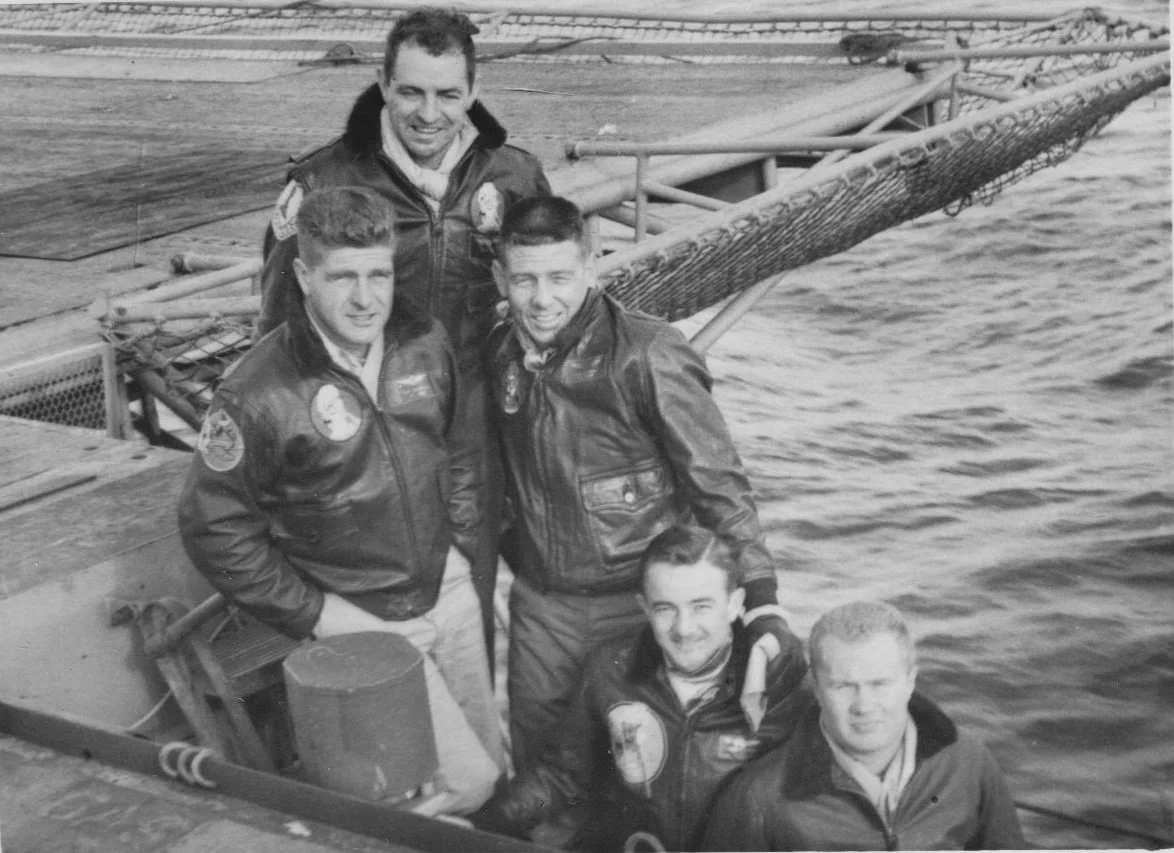
Photo, Right: The five Naval Aviators that made up Team George. Left to right: Lieutenant Sam Groves, Lieutenant Commander George Staeheli (Officer in Charge), Lieutenant Bill Jenkins, Lieutenant Jim Brown and Lieutenant junior grade Jay Baldwin.
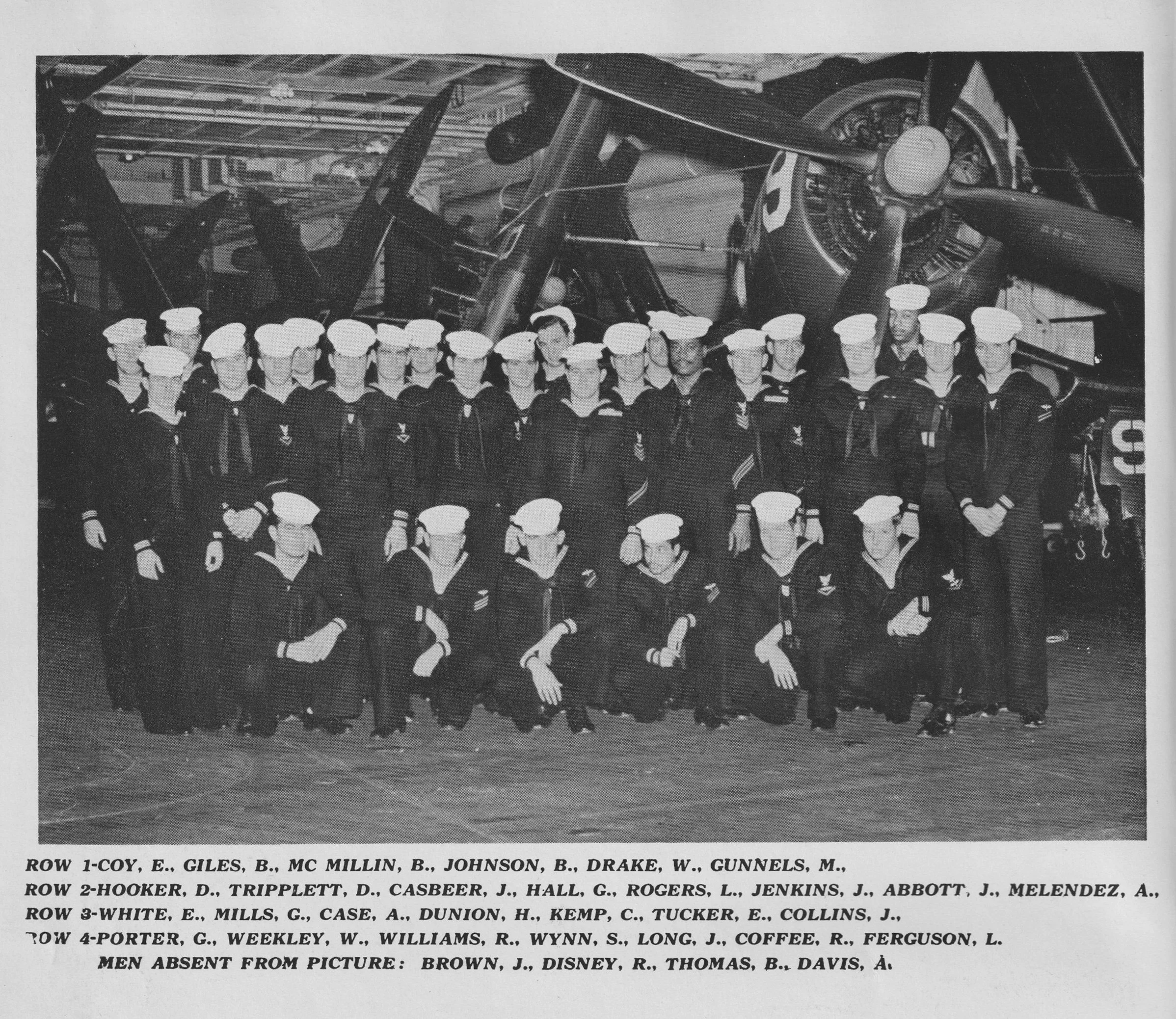
Photo, Far Right: The small enlisted cadre of Team George.
Photos and Documents courtesy of Jim Brown
“Where Everybody Flies 1st Class”
- Summer 2022 -
by
Michael S. Prophet
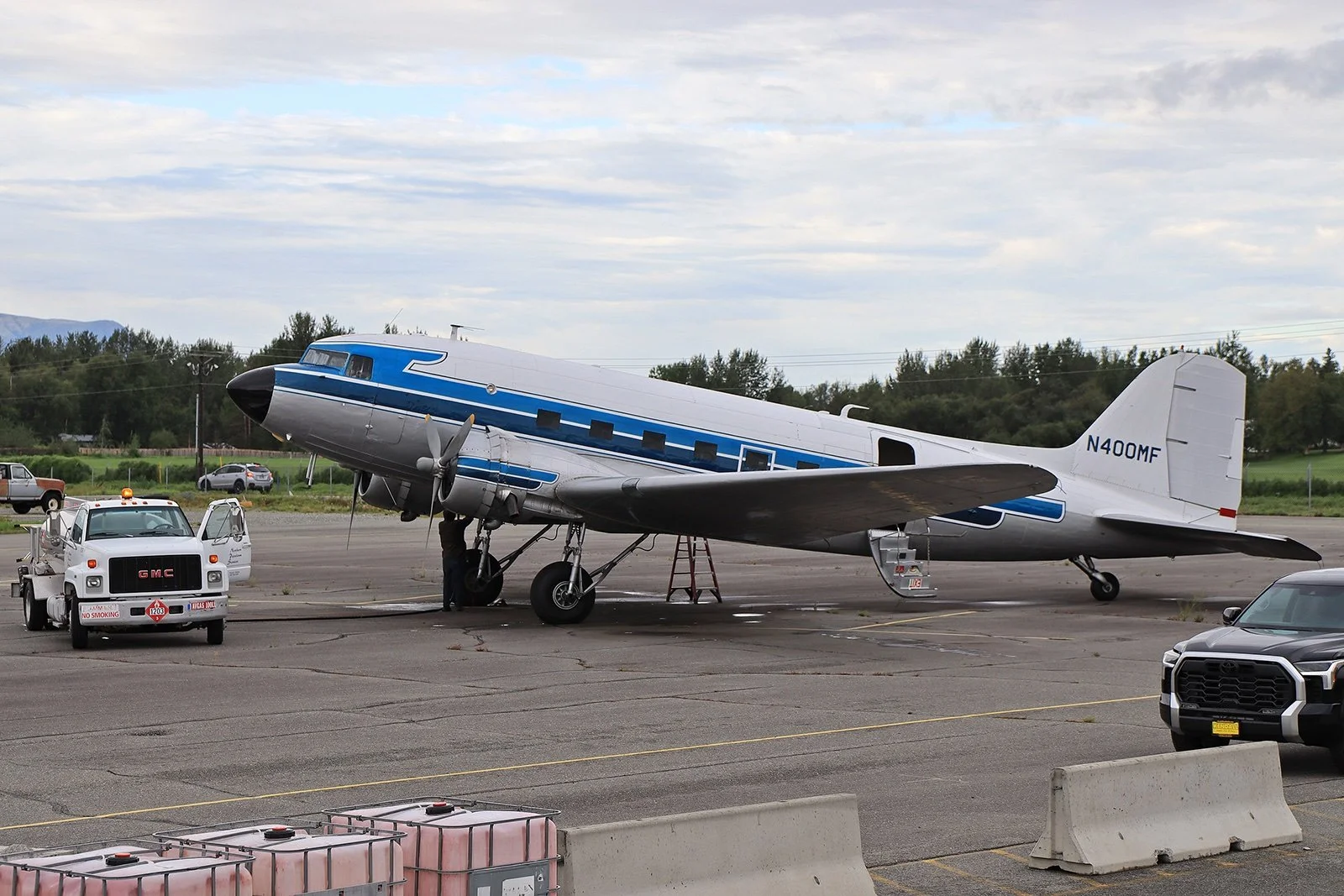
Ace photographer Michael S. Prophet has travelled the world in pursuit of old airplanes to photograph. On occasion, he has had the distinct pleasure of taking a flight on the subject of his photography. Back in 2022, Michael travelled from his home in The Netherlands on a photo expedition to Alaska, and while in Palmer, took a hop in a beautiful Douglas DC-3.
Thanks very much Michael for this great photo essay.
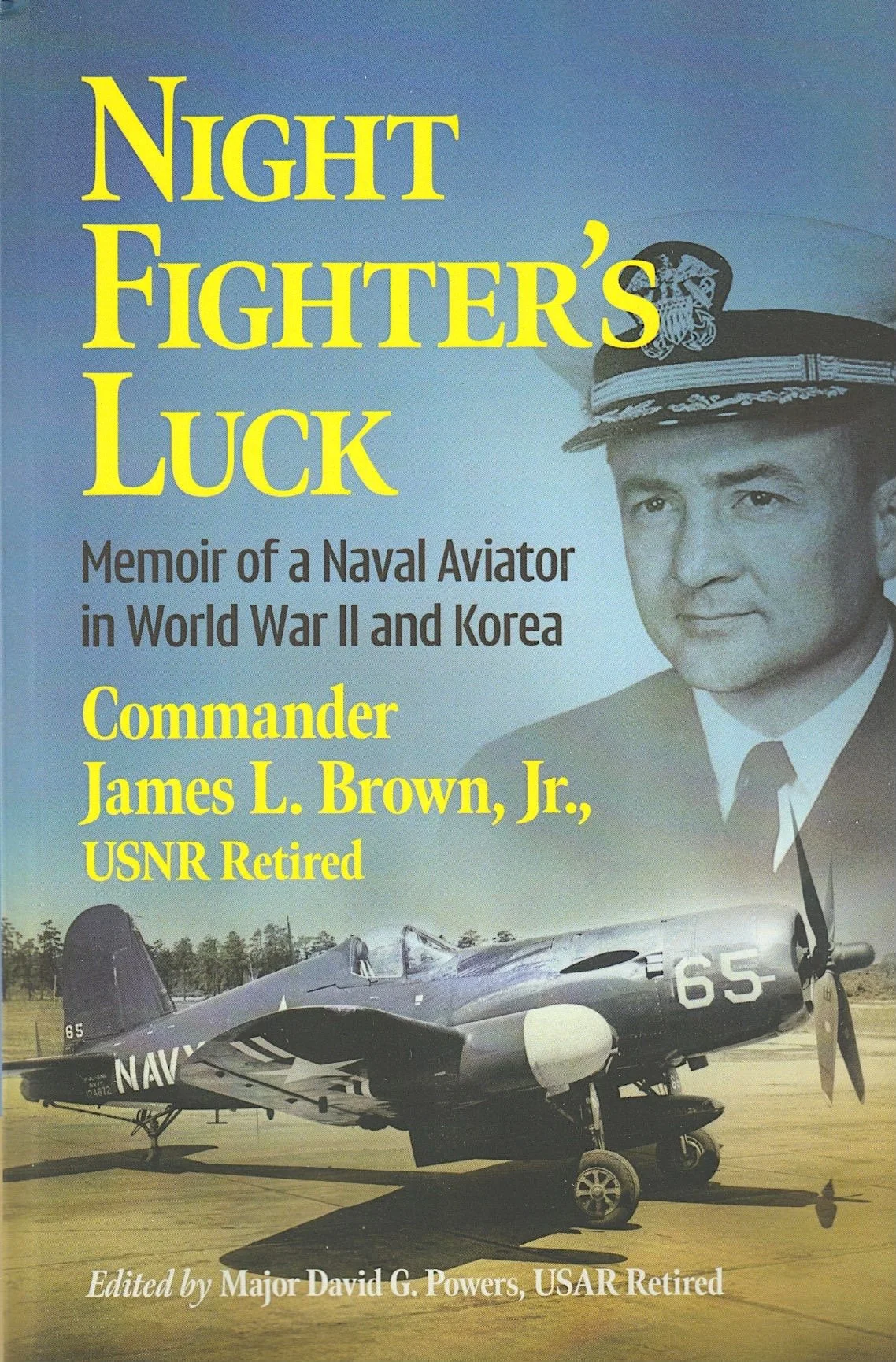
Night Fighter’s Luck
by
Commander James L. Brown, Jr.
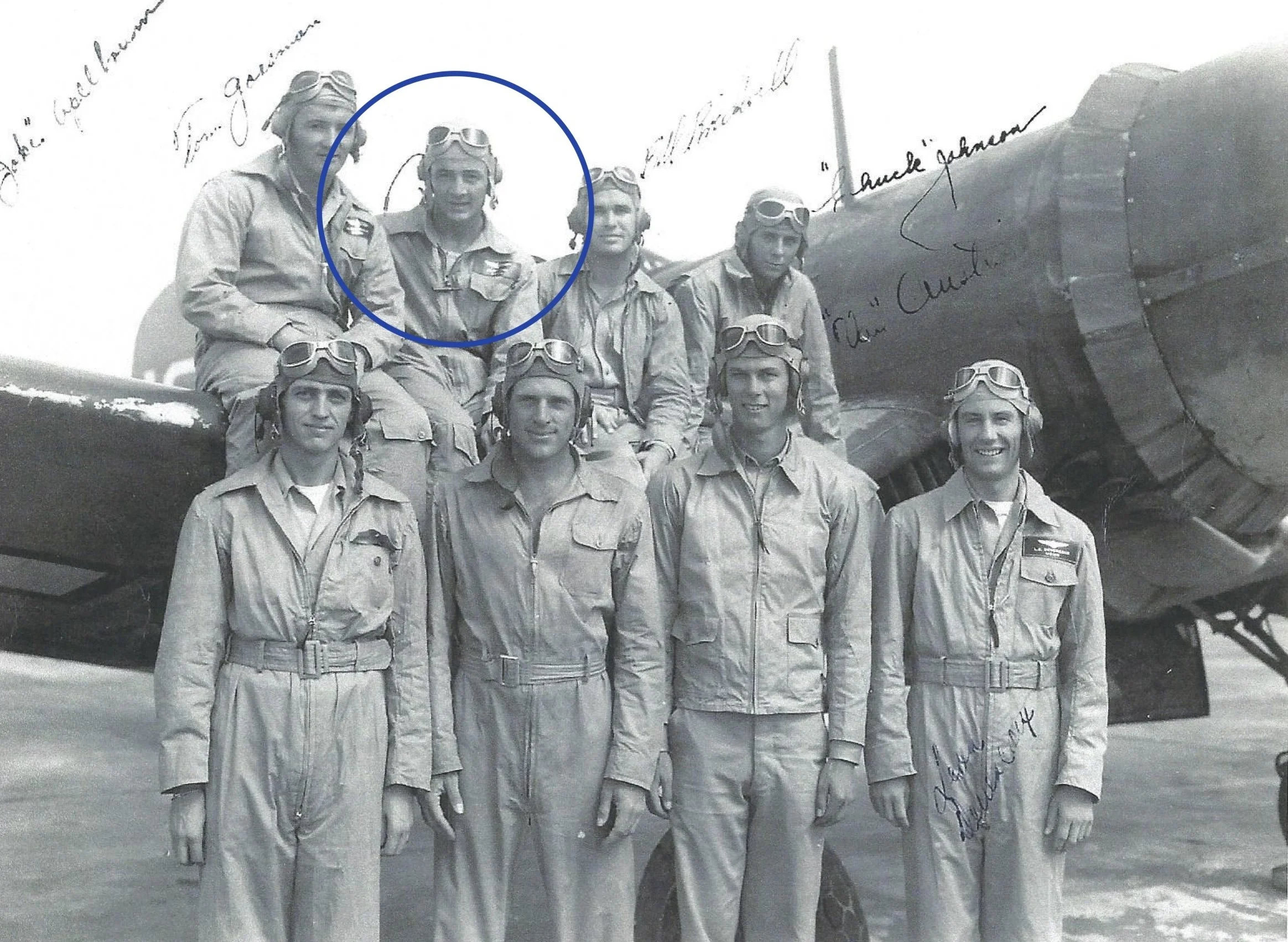
The first-hand stories of fear and frustration, happiness and sorrows of a night fighter pilot during World War Two, and a nighter heckler pilot during the Korean War. These are real stories told by the man who lived them. Jim Brown was a Naval Aviator (seen to the left while in night fighter school - 1944) who flew in the Pacific during World War Two and was later assigned to Composite Squadron THREE (VC-3), Team George, which cruised aboard the USS Oriskany (CV-34/CVA-34), during the Korean War
This book was published in the fall of 2026. It is available for order from the:
McFarland & Company
www.mcfarlandbooks.com
The Turtle and the Kangaroo
by
Jim Grant
(3rd Quarter 2025)
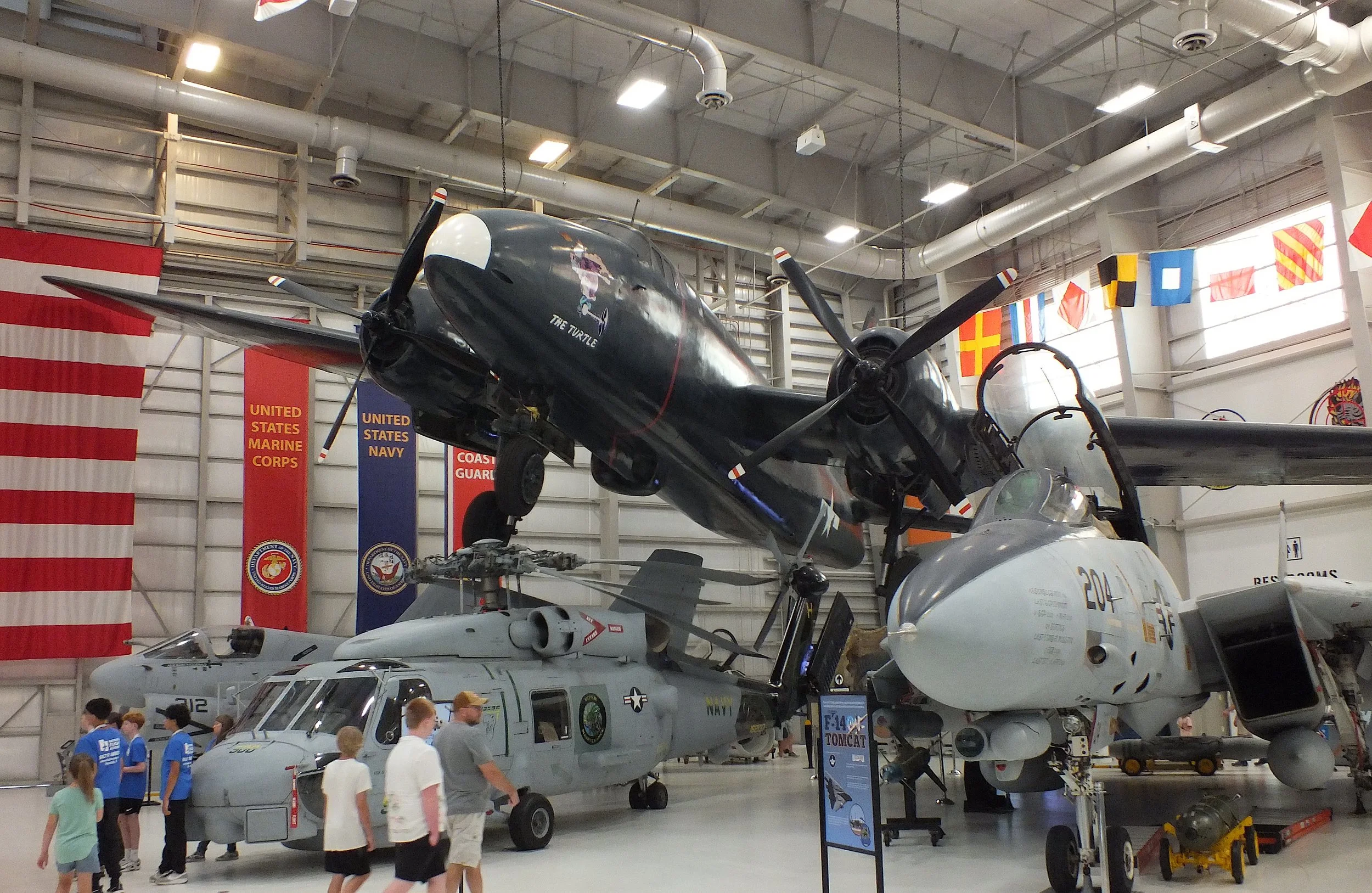
September 1946. With the Second World War over the United States Navy (USN) and the United States Army Air Forces (USAAF) had reverted to their earlier rivalry to prove that they were the superior military force and to ensure that funding continued to flow from the Congress Appropriations Committee to their service. The USAAF had recently set a new record by flying a Boeing B-29 Superfortress - the “Pacusan Dreamboat” - non stop from Guam to Washington D.C. The Navy, in the meantime, was preparing their answer, in the form of one of their newest maritime patrol aircraft, a Lockheed P2V-1 Neptune, nicknamed “The Turtle.” The name was a nod to the old story The Tortoise and the Hare, one of Aesop’s Fables. The P2V may not have been the fastest, but it would soon demonstrate it had the longest range. The city of Perth, Western Australia, was chosen as the departure point, with Seattle, Washington, as the primary destination.
Flying Navy Drones
Fleet Composite Squadron - EIGHT (VC-8)
Naval Station Roosevelt Roads
by
Raymond Haubelt
(1st Quarter 2024)
From 1966 to 1969, the author was assigned to Fleet Composite Squadron - EIGHT (VC-8), based at Naval Station Roosevelt Roads, Puerto Rico. He flew the Vought DF-8F Crusader, in the role as a drone director, mostly shepherding old Grumman QF-9F Cougar drones to, from, and around the target areas that were located just off the island of Puerto Rico. Getting one of these drones in the air, to the range, and if they were not scheduled to be destroyed, back to “Rosy” so they could be used again, was not a simple task. Lieutenant Haubelt relates how this was done.
F.A.M. 3
”The Pelican Route”
by
David G. Powers
(1st Quarter 2024)
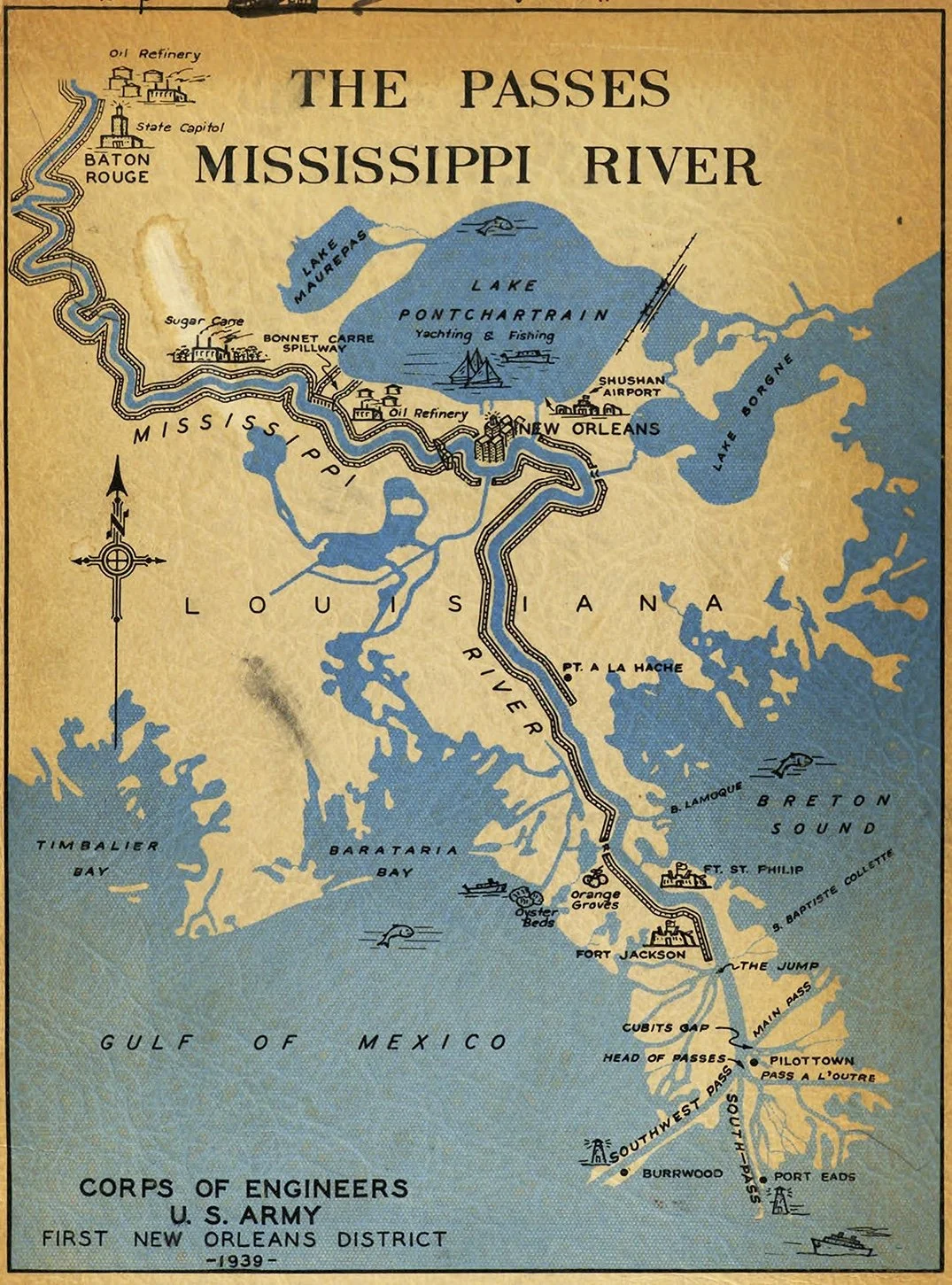
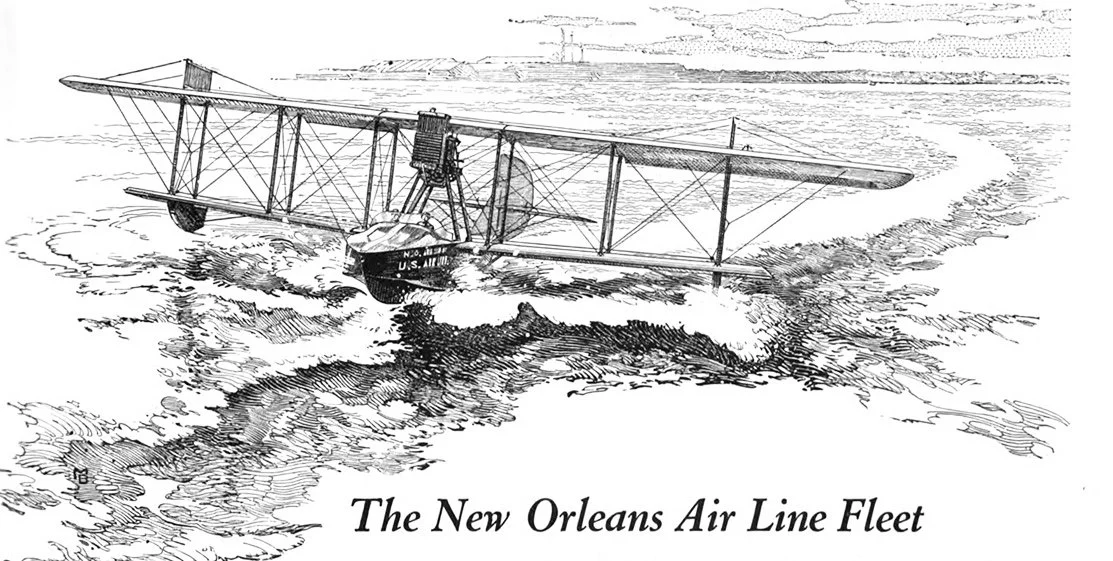
One correspondent of the era called it “The Pelican Route,” which makes sense because although it was a foreign air mail run, this route, in its entirety, was located within the State of Louisiana - The Pelican State. As the crow flies, this route was only some 75 statute miles in length - give or take a mile or two, depending on the reference. However, since the airplanes used were strictly flying boats, it behooved the pilots to remain near the winding Mississippi river - just in case - so the route was more like 80 statute miles (the total water distance was more like 100 miles). Inaugurated on 9 April 1923, the Pelican Route, which ran from New Orleans down to a river station called Pilottown, was flown for just over a decade, by a number of colorful characters, some seemingly straight out of the movies.
The Cuban Missile Crisis
United States Naval Aviation Operations
by
The Naval History and Heritage Command
The United States Department of State
The LOGBOOK Staff
(1st Quarter 2024)
It is certainly one of the most written about episodes in the history of the United States, one that it is not hyperbole to suggest could have resulted in a global disaster. The Cuban Missile Crisis, October 1962, brought the players, and indeed, the world, close to nuclear war. As mentioned, much has been written about the events during those tense days. Here, through the use of monographs promulgated by the Naval History and Heritage Command, and the U.S. State Department, with added material and coordination by the staff here at LOGBOOK, we bring you a concise history of U.S. Naval Aviation operations during the showdown.
A Short History of Isthmian Airways
1929 - 1936
by
David G. Powers
(2nd Quarter 2024)
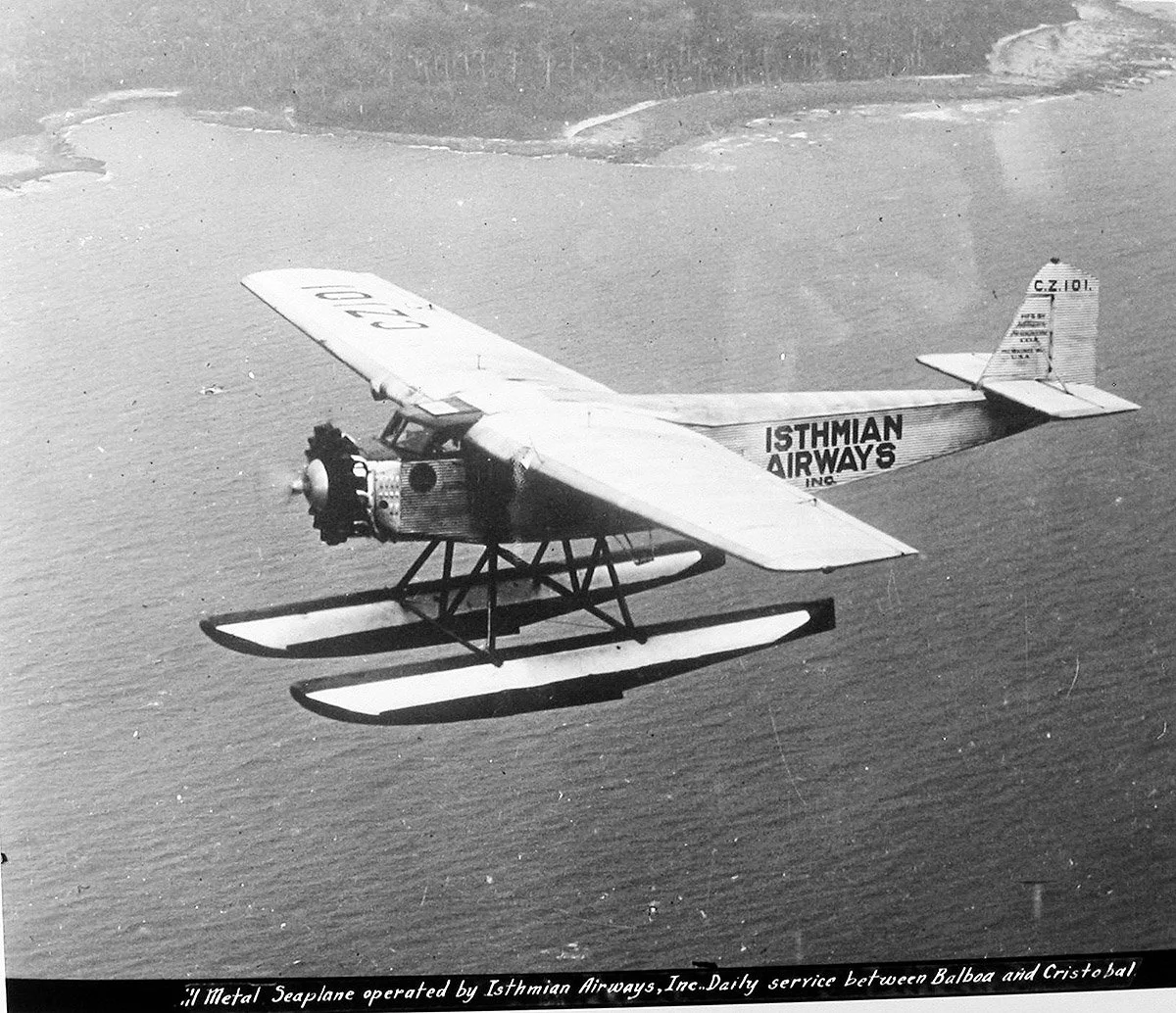
The April 1930, edition of the Bulletin of the Pan American Union noted that: “The shortest air line in Latin America, and possibly in the world, is that of the Isthmian Airways (Inc.). Passengers and goods are carried 47 miles from ocean to ocean over the Panama Canal several times a day.”
It was, indeed, a short route offering regular service back and forth across the Isthmus of Panama, all the while staying primarily within the boundaries of the Canal Zone (C.Z.). Isthmian Airways was founded in 1929.
The Wüstennotstaffel: The German Desert Rescue Squadron
by
Andrew Arthy & Adam Thompson
(2nd Quarter 2024)
The desert of northern Egypt and Libya is a brutal, harsh and unforgiving environment, and can be deadly for any airman forced down in it. The German Luft- waffe was quick to recognize this fact after it joined its Italian allies in the North African campaign in early 1941, and this led to the creation of a unique flying unit, the Wüstennotstaffel, or desert rescue squadron. Led by inspirational Staffelkapitän (squadron leader) Heinz Gustav Kroseberg, the Wüstennotstaffel very success- fully operated the remarkable German short take-off and landing (STOL) aircraft, the Fieseler 156 Storch, throughout its two-year existence. From its formation in the spring of 1941 until the last Axis troops surren- dered in Tunisia in May 1943, the Staffel flew hundreds of rescue missions picking up both friendly and enemy airmen stranded in the desert.
RISKING IT ALL FOR AN ENEMY OFFICER
“Any man’s death diminishes me, because I am involved in mankind.”
John Donne (1623)
by
Robert B. Robeson, LTC, USA (Ret)
(2nd Quarter 2024)
It was Sunday, March 7, 1970, at our 236th Medical Detachment (Helicopter Ambulance) headquarters at Red Beach in Da Nang, South Vietnam, where my flight crew of four was on 24-hour standby duty. I’d recently been promoted to unit commander as a captain the previous month. Combat action had been quiet that morning in our area of operation and no medevac missions had yet been received. Yet…
A real life story told by the man who lived it
Banjos Over Korea
by
David G. Powers and David R. McLaren
(2nd Quarter 2024)
One of the odd things within United States Naval Aviation is the propensity of their aviators to rename their aircraft from its official name to one of their own choosing. It is this particular case that the McDonnell F2H Banshee was renamed the “Banjo” by those associated with it. What, if anything, McDonnell company employees might have thought of this has been lost to time. “Mac” [James S. McDonnell] had started the naming of their aircraft after the nocturnal hauntings with their, and US Navy’s first jet aircraft, the FD/FH Phantom [first flight 26 January 1945], and this would continue through the years. The F2H Banshee’s successor was the F3H Demon. Of course, the Phantom moniker would return with the mighty F-4 Phantom II.
While jet-powered aircraft played a small role in the latter days of World War Two, it was during the Korean War (25 June 1950 - 27 July 1953) that jets entered the fray in a big way.
And, once you get done reading this article, here are a couple of historic documents that you may enjoy. Simply click on the title
Photos By Banshee. Leatherneck - Magazine of the Marines, October 1952
Standard Aircraft Characteristics - F2H-2 Banshee. NAVAIR Document 1335A (Revision 1-1949)
Near Miss Over Russian Airspace
By
Holly Kress-Hall
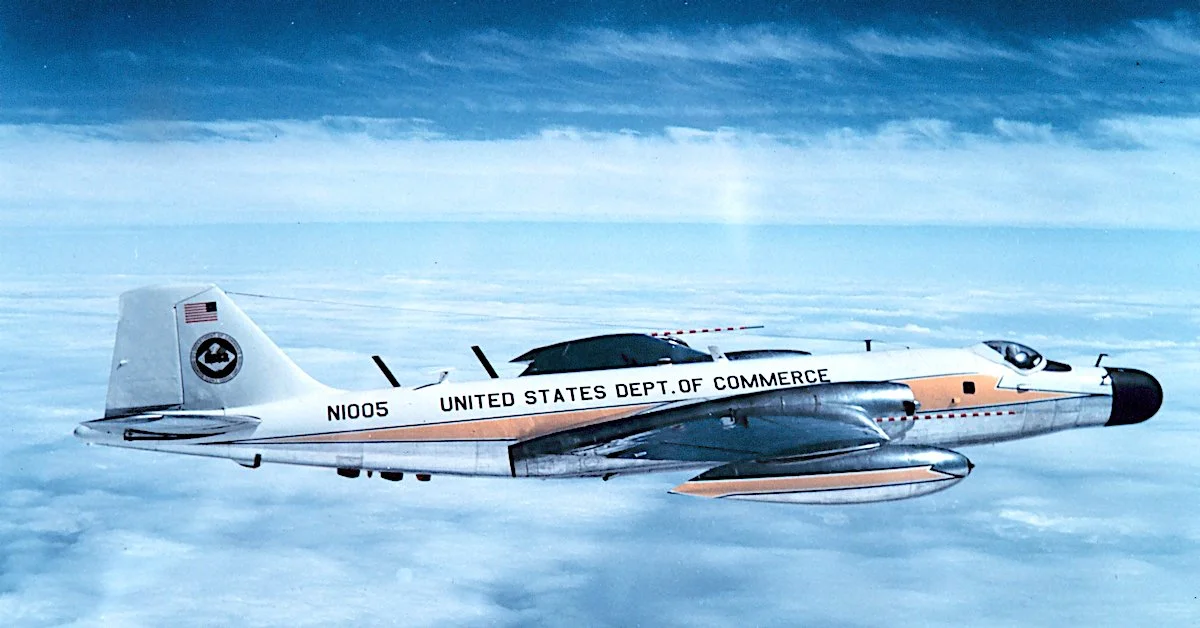
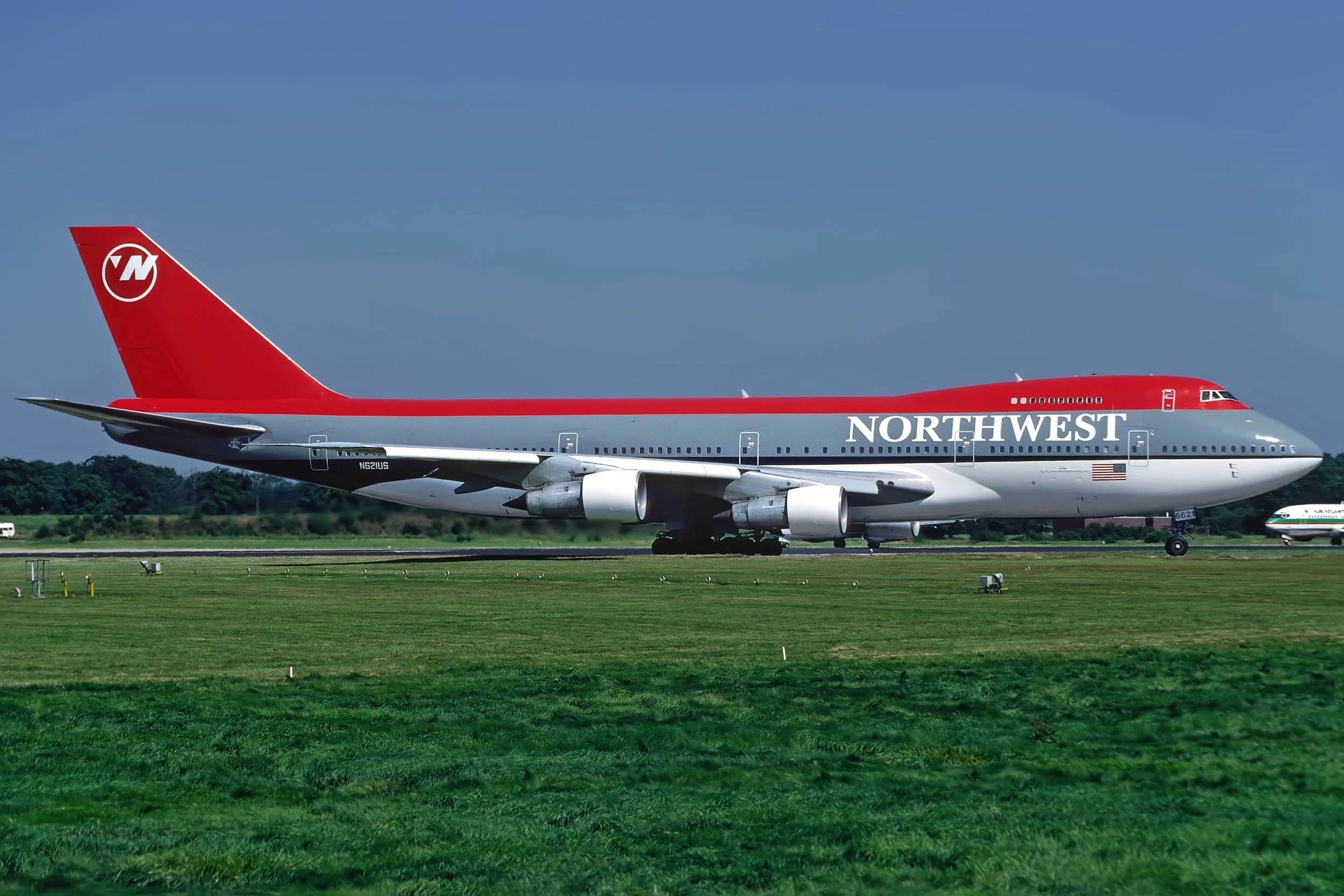
Nearly three decades ago, a near-miss incident over Russian airspace where more than 600 passengers and crewmembers narrowly escaped death, may now be ripe for full disclosure. The Northwest Airlines captain whose instinctive response to imminent danger, passed away in 2010, leaving the copilot as the sole witness to the event that occurred on the flight deck in 1995. The following account is based on firsthand recollection and supporting historical logbook documents from George Hall, the flight’s copilot.
Lights and Footprints
- Finn Ronne’s Antarctica -
by
Steve Zugar and David G. Powers
She Was a Beautiful Aircraft
by
Ken Wright
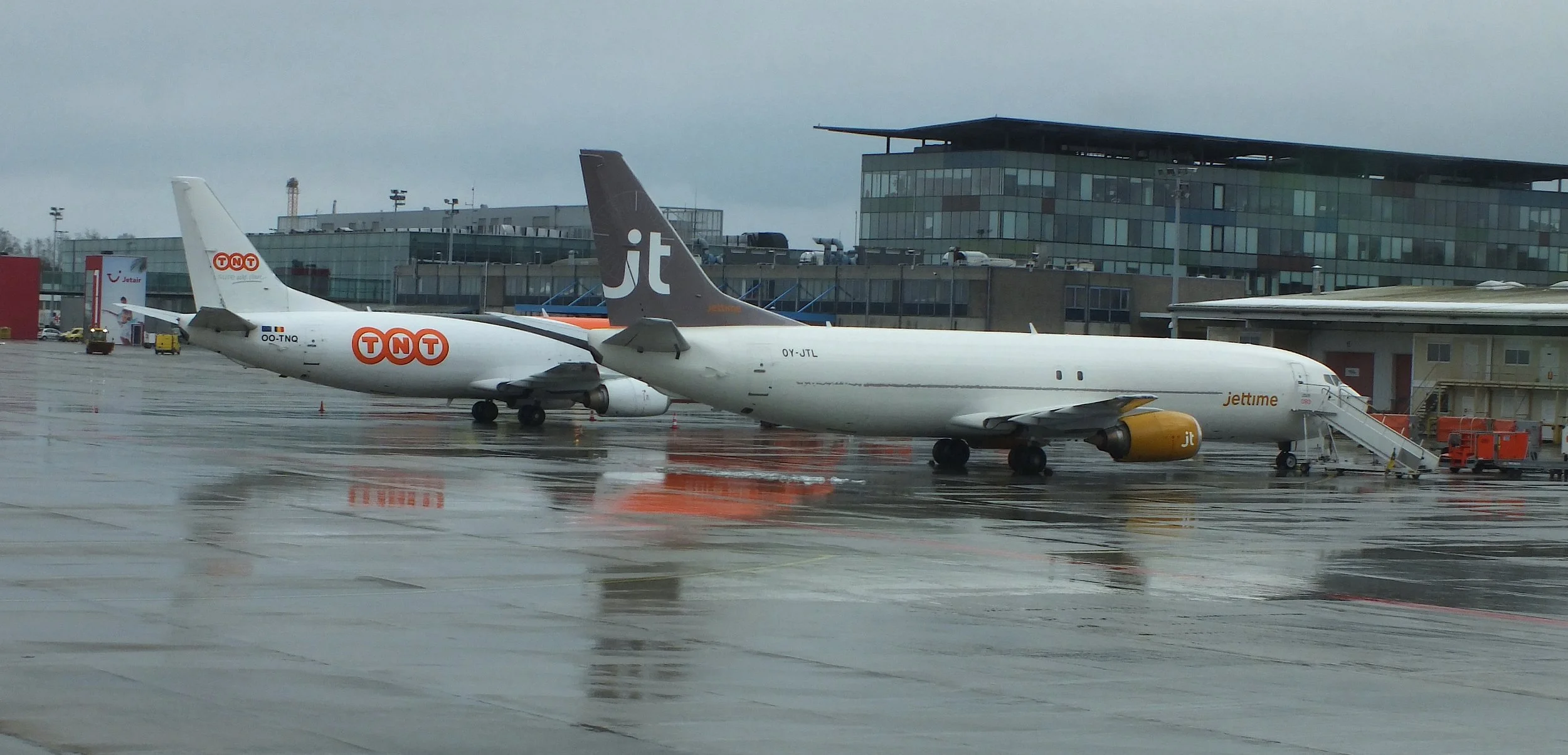
During World War Two, 37,034 Australians volunteered for training as pilots, navigators, gunners and ground crews in the Royal Australian Air Force (RAAF) for service in most theatres of the war. They left to fight far away from their homes and loved ones. They came from the land, from sheep and cattle sta- tions, factories, cities, country towns and brought with them that unique sense of humour and devoted mateship that is the fierce pride of the Australian war- rior. In the freezing skies over Europe, over 6,636 Australian aviators paid the ultimate price to win a war. They came as boys, flew with Royal Air Force (RAF) and if they survived, were old men before the age of 30. When the war in Europe ended, 15,000 Australians had been involved in the air war against Nazi Germany and Fascist Italy.
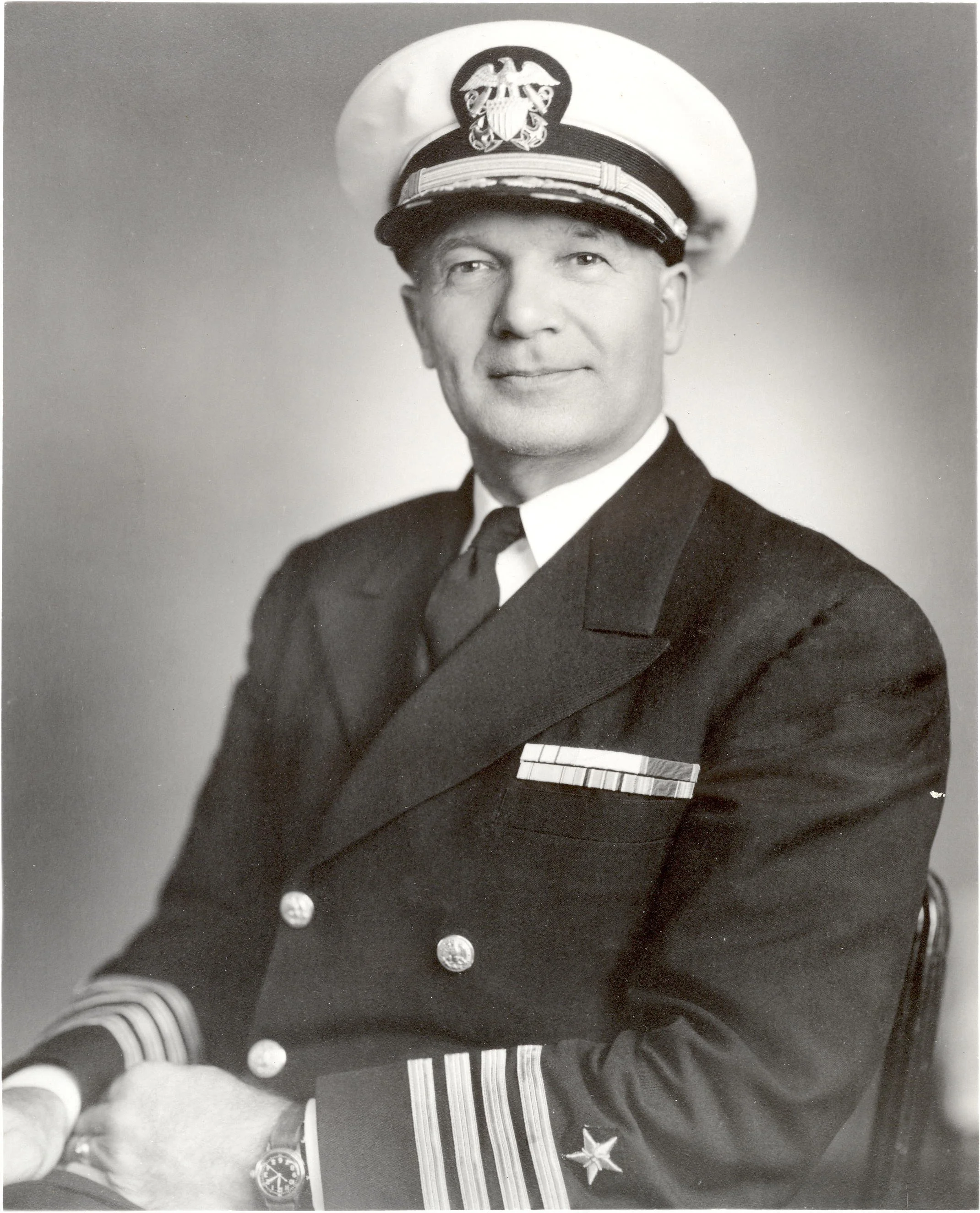
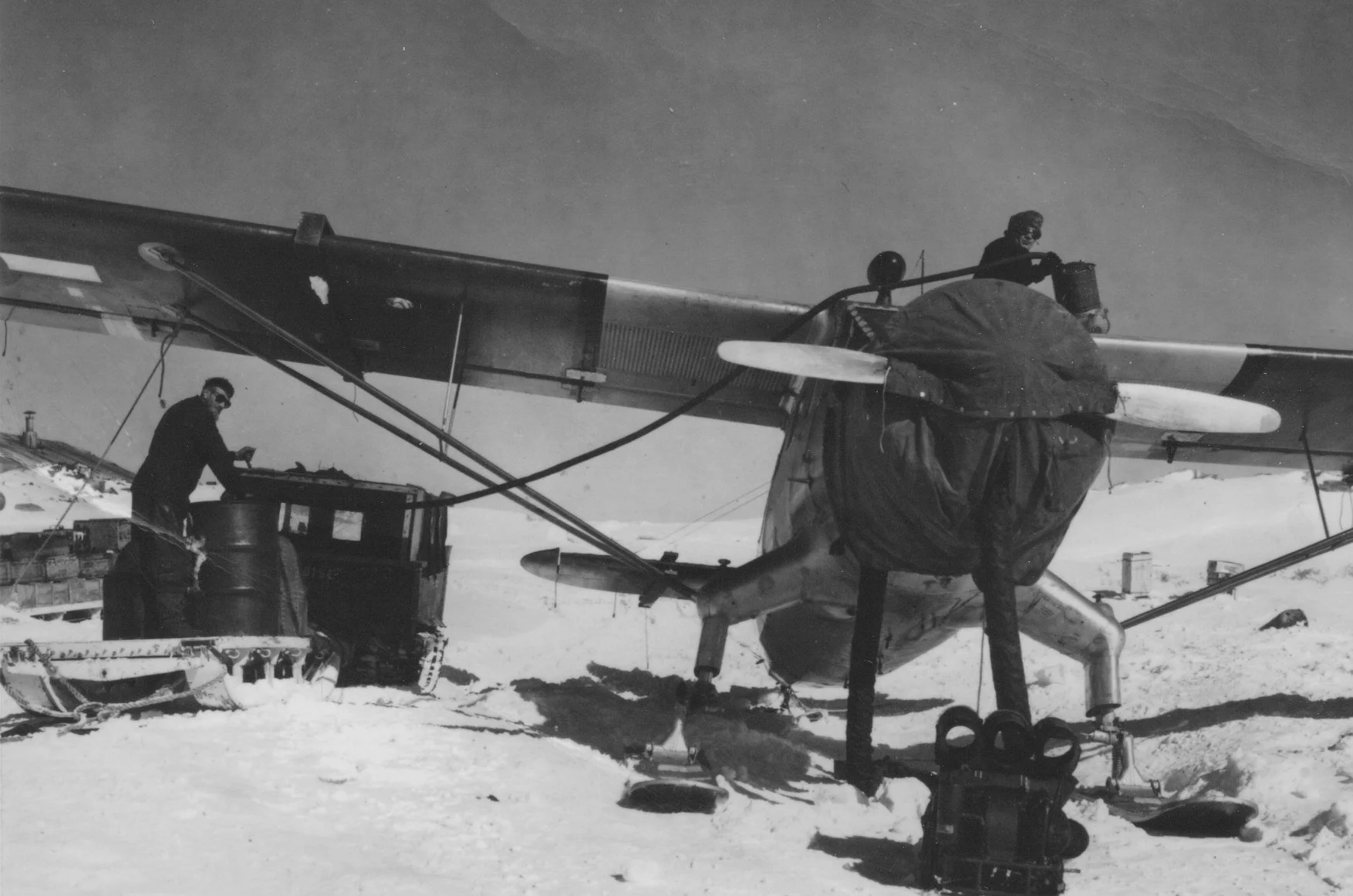
With the end of World War Two, scientific expeditions returned to Antarctica. One of the last privately funded efforts was fielded by veteran explorer Finn Ronne (pictured to the right, who was also a U.S. Navy Reservist who would later retire as a captain). The Ronne Antarctic Research Expedition (RARE) of 1946-1948 was also one of the first expeditions to use aircraft in the field, using a small fleet of three airplanes. The airplanes were extensively used to conduct aerial photo-mapping, as well as ferrying supplies to scientific teams out on the ice, and in one instance, on a search and rescue mission.
Although the operating environment was severe and the weather often contrary, the airplanes proved their worth, perhaps not yet replacing the dog sled, at least for the time being.