THE LOGBOOK ARCHIVES
VOLUME ONE
Twenty years, and counting - That’s how long LOGBOOK magazine has been publishing some of the best in aviation history. In that time we have amassed well over 200 feature, long-form articles, covering the entire spectrum of flight - from the first stick and paper attempts at flying to the X-fighters of today. As we transition from print media to digital we will be uploading all of these articles. It may take us a while, but that’s the plan. Simply click on the title, and enjoy.
Please note: As we add articles to The Archive, we will post them on the bottom of the page, so scroll down and see what’s new. Find a broken link, drop us note, and we will get it fixed.
Convair F-106 Delta Dart Scrapbook
by
Warren E. Thompson
(2nd Quarter 2016)
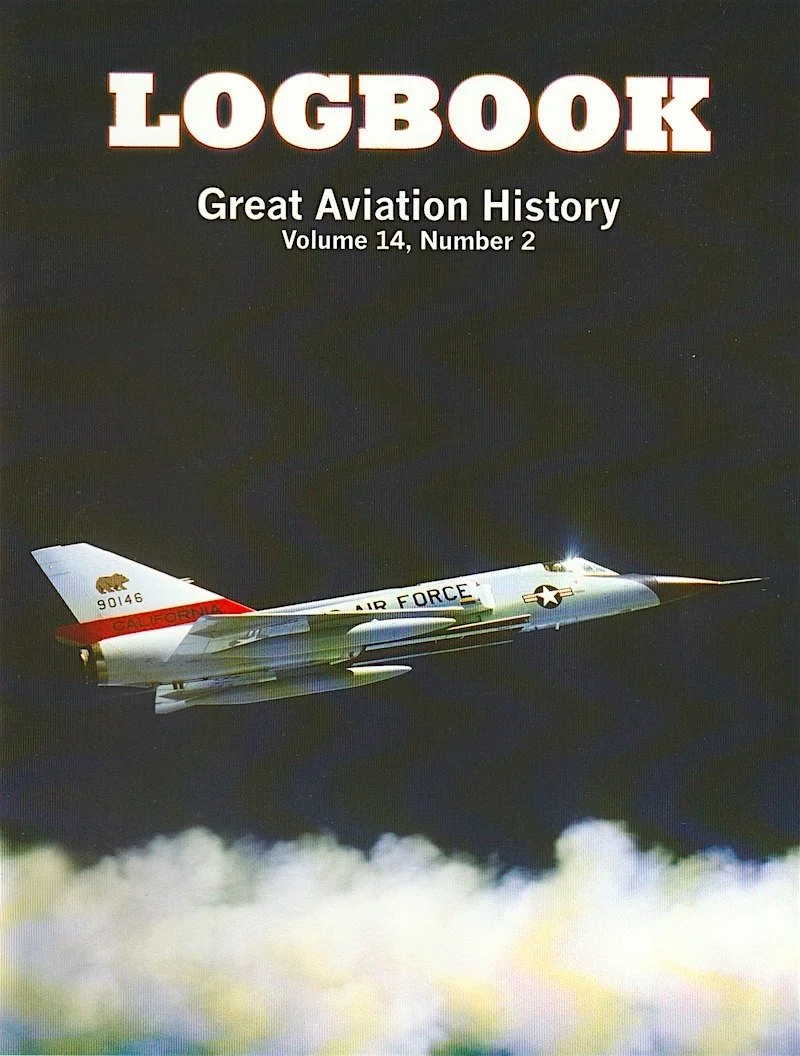
A photo album of what was arguably one of the best looking fighter aircraft ever produced - the Convair F-106 Delta Dart. Warren Thompson delves into his vast photograph collection to bring us a selection of images of the “Six.” Enjoy
The Making of a Mercenary Air Force
An Excerpt From The New Book: “The Caribbean Legion”
by
Dan Hagedorn and Mario Overall
(3rd Quarter 2021)
This article is just a small excerpt from the book “The Caribbean Legion and Its Mercenary Air Forces - 1947-1950” by Dan Hagedorn and Mario Overall. Hovering around the murky periphery of the Caribbean Legion were a number of pilots, many of American nationality, some of whom appeared to be legitimate ferry pilots, simply delivering airplanes for the customer. Others, however, seem to have taken a bit more of an active role in the designs of the Legion.
Lockheed’s Turbo-Connies
by
Jack Gearhart
(2nd Quarter 2000)
They could have been contenders in the race for a turbine-powered, long-range transport aircraft, to replace the current piston-powered birds then in use. In the 1950s, many in the industry viewed the new turbine engine, both turbo-prop and turbo-jet, although still early in their development, as the power plant for the future. Lockheed was in the hunt from the start, using their Constellation as the basis for a turbine-powered aircraft. Indeed, as early as 1945 Lockheed had a turbine-powered design study underway, with the Connie as the basic platform. Eventually, the company built four of a later turbo-prop design, and it turned out to be quite a performer. This is their story.
A Little Mystery
The World War Two Airfields of Efate Island
by
David G. Powers
(1st Quarter 2021)
According to a 1950 “Naval Aviation News” article there were three named airfields on Efate: Bauer Field, Taylor Field, and Haring Field. The same article lists a Finucane Field, located on Guadalcanal, in the Solomon Islands. To confirm these names and locations, I then turned to one of the best references concerning the history of U. S. Naval Aviation, the book “United States Naval Aviation 1910- 2010,” written by Mark L. Evans and Roy A. Grossnick, and published by the Naval History and Heritage Command. And, it was here the mystery started. Appendix 11 of this massive volume lists naval air stations and fields named for Naval and Marine Corps aviators. So, Bauer Field was there, as are Taylor and Haring Fields. Finucane Field, however, is now recorded as being on Efate, as well. A total of four airfields? Again, this is one of those history rabbit holes that, although not the most important of earth shattering mysteries, I wanted to solve. So, I started to do some casual digging.
A Short History of Four Star Air Cargo
by
Curtiss R. White
(4th Quarter 2000)
DC-3s in the Tropics
A Flight on FourStar Air Cargo
by
David G. Powers
(3rd Quarter 2000)
Four Star Air Cargo and Hurricane Hugo
by
Four Star Air Cargo and LOGBOOK
(4th Quarter 2000)
Freight Dog Scrapbook
Four Star Air Cargo
by
David G Powers
(4th Quarter 2000)
A View From The Deck
More Tales From The Flight Deck
by
Charles E,. Larsen
(2nd Quarter 2005)
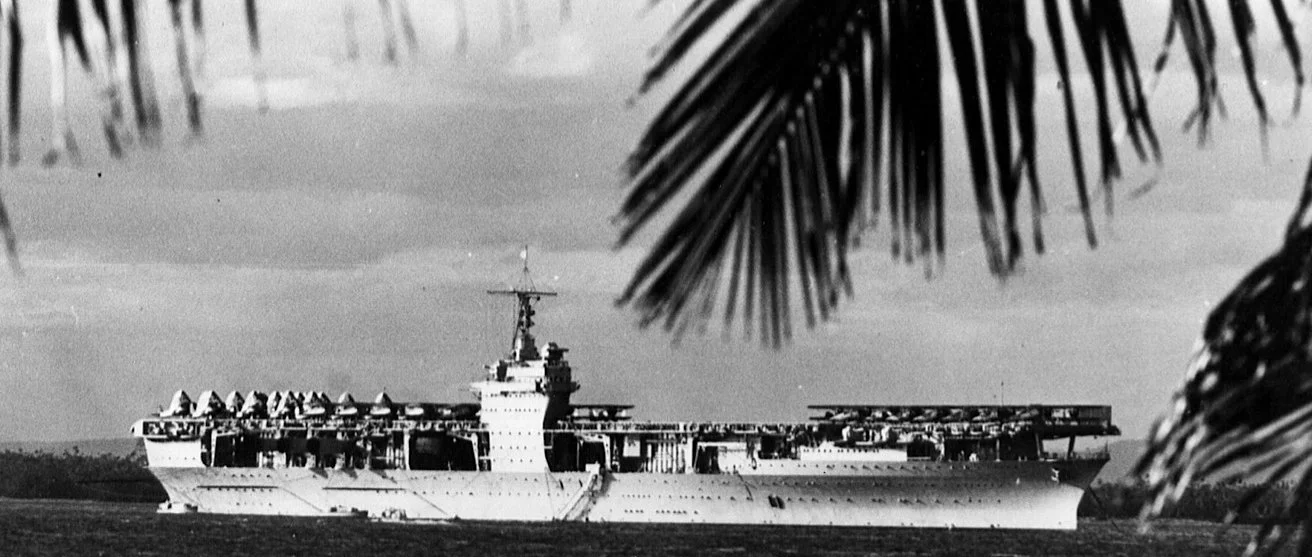
In the summer of 1954, my transfer orders came in. From Hunter’s Point Naval Shipyard – just south of San Francisco - I was to travel to Mare Island Naval Shipyard – a few dozen miles north of San Francisco – and report aboard the USS Gardiners Bay (AVP-39) – a seaplane tender (small) of the Barnegat-class. Two days were allotted for this journey. After one aimless day at the YMCA, I hopped on a bus for the trip to my new assignment. This is a companion piece to the article we brought to you in the 1st Quarter 2004 issue of LOGBOOK. In that article, Charles Larsen told of his days in training to become an aviation boatswain’s mate and of his first cruise, in 1953, working on the flight deck aboard the USS Kearsarge (CV-33).
The 31st Fighter Group at the Kasserine Pass
14 - 19 February 1943
by
Andrew Arthy
(4th Quarter 2020)
The Battle of Kasserine Pass is remembered as a great land battle, and as German Generalfeldmarschall Erwin Rommel’s last North African success. However, the ae- rial conflict over the battlefield was just as intense as the clashes on the ground, and one of the most prom- inent units involved was the American 31st Fighter Group (FG). Equipped with the British Supermarine Spitfire, the 31st had been overseas since mid-1942, but up to early February 1943 had seen minimal combat. That would change dramatically in the period covered by this article, as Rommel’s army pushed Allied troops back in central Tunisia. The 31st FG was confronted with many challenges in Africa in mid-February 1943, including terrible weather, skilled aerial opponents, and a hasty evacuation from its airfield. However, it passed all tests with flying colors, and the Battle of Kasserine Pass saw the 31st FG come of age. See cover shot to the right.
North African Odyssey
by
Captain Joe D. Scalpone
(2nd Quarter 2014)
Editor’s Note: I was at Maxwell Air Force Base, Montgomery, Alabama, at the Air Force Historical Research Agency’s archives doing some research on the North African operations of the 3rd Photo Reconnaissance Group during World War Two. Dredging through stacks of dusty file folders I ran across a series of biographical sketches of various pilots assigned to the squadrons that comprised the Group. Although these sketches were outside the scope of the research I was doing, I found myself reading one after another. This was a trove of personal accounts of the guys who flew the missions, and were compelling, first-hand stories.
Each sketch started out with a brief biography of the pilot, often with a photo or two, followed by the pilot’s story, in his own words. I would like to present one of these sketches, by Captain Joe Scalpone, courtesy of the Air Force Historical Research Agency, for your review. Enjoy.
In July 1942, Captain Scalpone was assigned to the 12th Squadron of the 3rd Photo Group at Colorado Springs, Colorado and saw 13 months service in North Africa with that organization. The mission to North Italy, to Venice, Trieste and other points referred to in the attached article was the one which earned Captain Scalpone the Distinguished Flying Cross.
Mustang RCR* Project
by
David G. Powers
(2nd Quarter 2015)
The 17 May 1974, issue of the “NWC Rocketeer” – the base newspaper for the Naval Weapons Center (NWC), China Lake, California – ran a front page article announcing the upcoming Armed Forces Day open house, to be held that following Saturday. Listed in the article were a number of aircraft to be on public display, including many birds then current in the Navy/Marine Corps inventory - Douglas A-4 Skyhawks, Grumman A-6 Intruders, McDonnell F-4 Phantom IIs and Bell AH-1J Cobra gunships, among several others. The article also noted, with an accompanying photo, a U.S. Army P-51 Mustang (although the designation F-51 would have been more appropriate). This aircraft was not a pampered hangar pet of some wealthy civilian owner, but rather an active duty military aircraft still in operation long after the type had been retired from front line squadron service. If this wasn’t unusual enough, as the photo in the article shows, this Mustang also packed an unusual punch, as it sported a pair of 106mm recoilless rifles mounted one on each wingtip. (See photo below.)
* ReCoilless Rifle
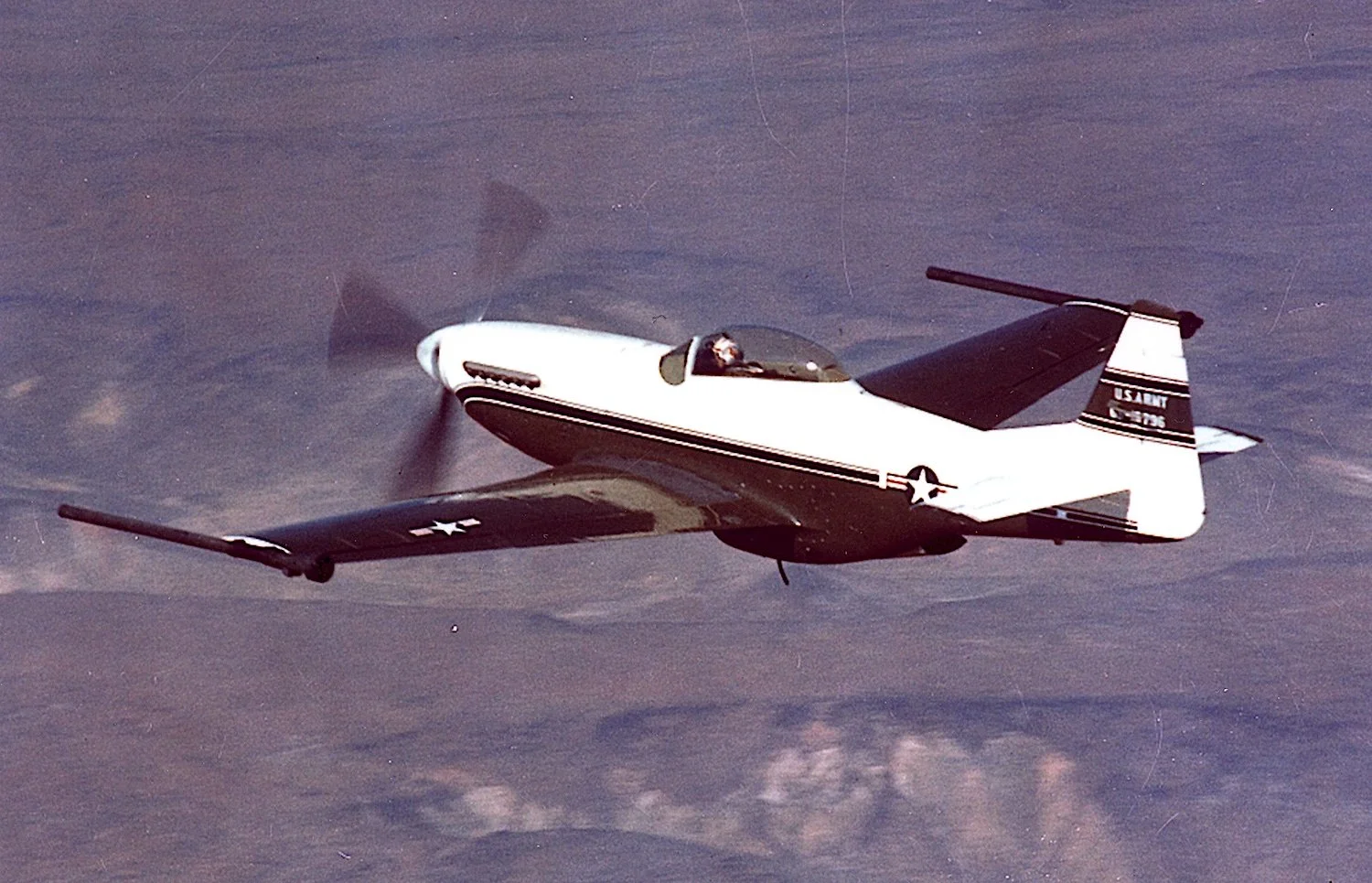
“Still at Work”*
In Pursuit of a Bolivian Super DC-3
by
Michael Prophet and Andre van Loon
(2nd Quarter 2007)
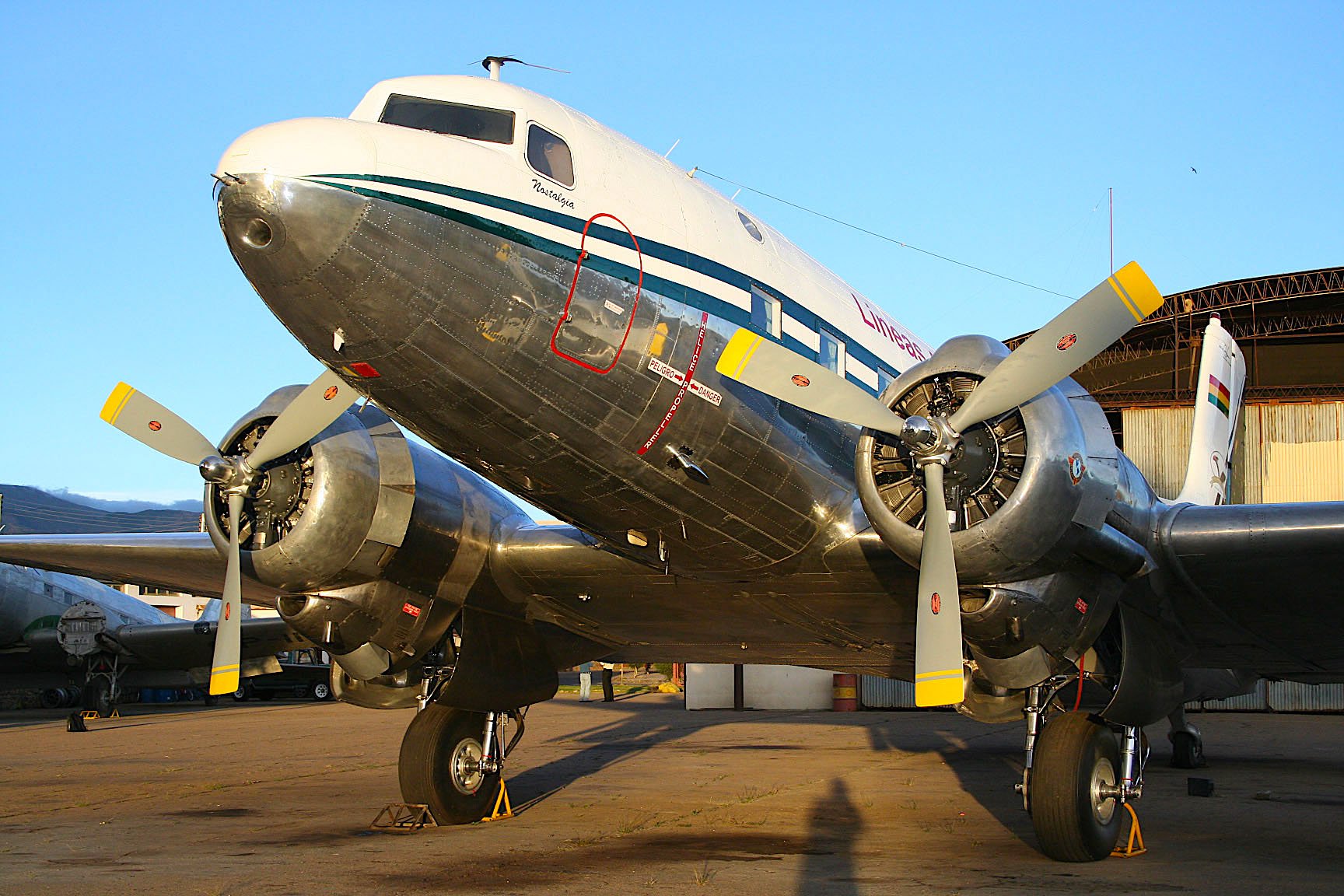
Ace photographers Michael Prophet and Andre van Loon have roamed all over the globe in pursuit of old round motor airplanes that are still flying and earning their keep in the air. In this case, they traveled from their home in the Netherlands, across the Atlantic, and much of the continent of South America, to a small town called Cochabamba, Bolivia, to photograph, and hopefully get a flight in, one of the few remaining airworthy Douglas Super DC-3s (DC-3S). As can be seen in their stunning photos (one of which appears to the right), this old Douglas, now in the fleet of a small Bolivian local service airline called Lineas Aereas Canedo, looks fantastic. Although it looks great, this bird is still making a living as a commercial aircraft.
* “Still at Work” is a feature that chronicles various old airplanes that far from being pampered hangar queens still fly for commercial operators.
The Sixty-Four Days of Victor Chapman
by
Herb Kugel
(2nd Quarter 2014)
When World War One began in August 1914, many young Americans rallied to the Allied cause even though America was not in the war at that time. Some were idealists, some were crusaders, some were adventurers and some were just misfits. Others, like Victor Chapman, were combinations of all the above.
Victor Chapman, although he was from an affluent family, fought for months in the trenches alongside the French soldiers. After being accepted by the French Aviation Service, he flew as a bombardier/observer in a bomber squadron. He was then accepted for pilot training, and was eventually posted to the famed Lafayette Escadrille. His tenure there lasted sixty-four days. Canadian aviation historian Herb Kugel tell his story.
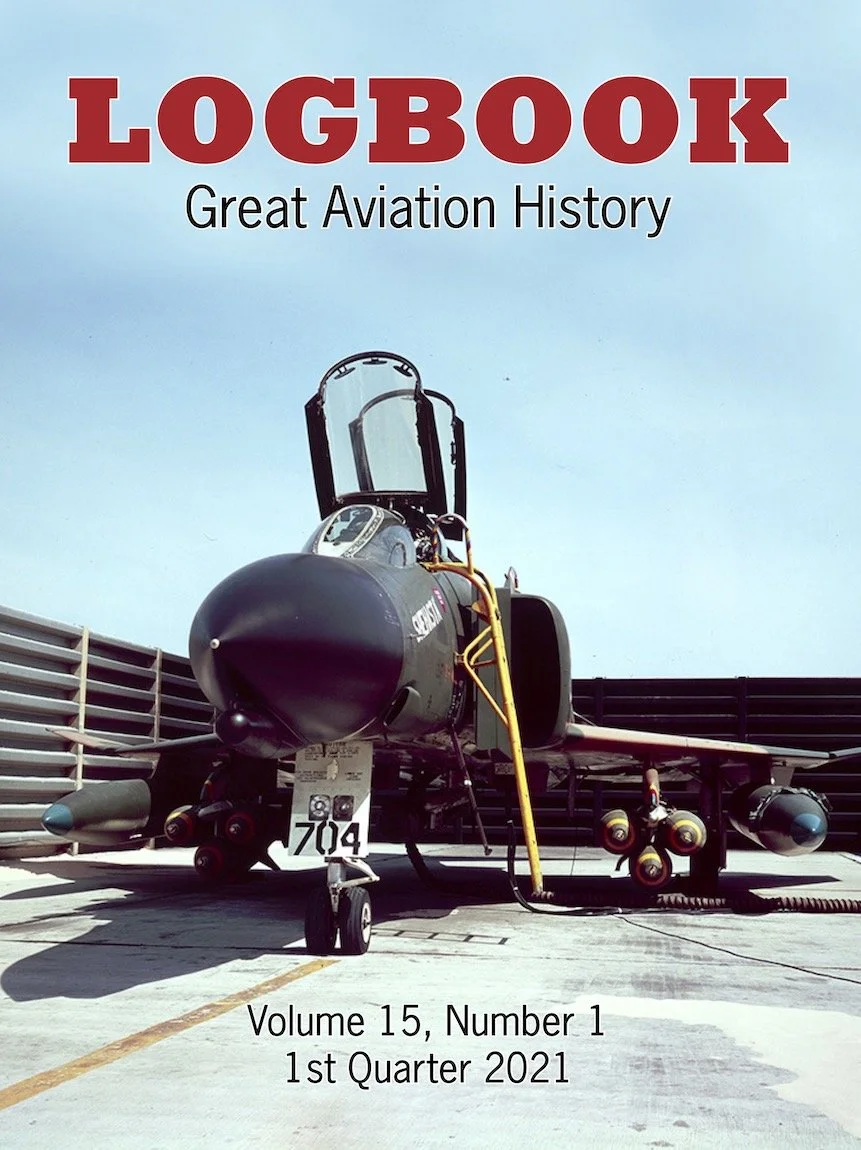
My Introduction to the McDonnell F-4C Phantom II -1964
by
Val Johnson
(1st Quarter 2021)
TORREJON AIR BASE, MADRID, SPAIN - May 1964:
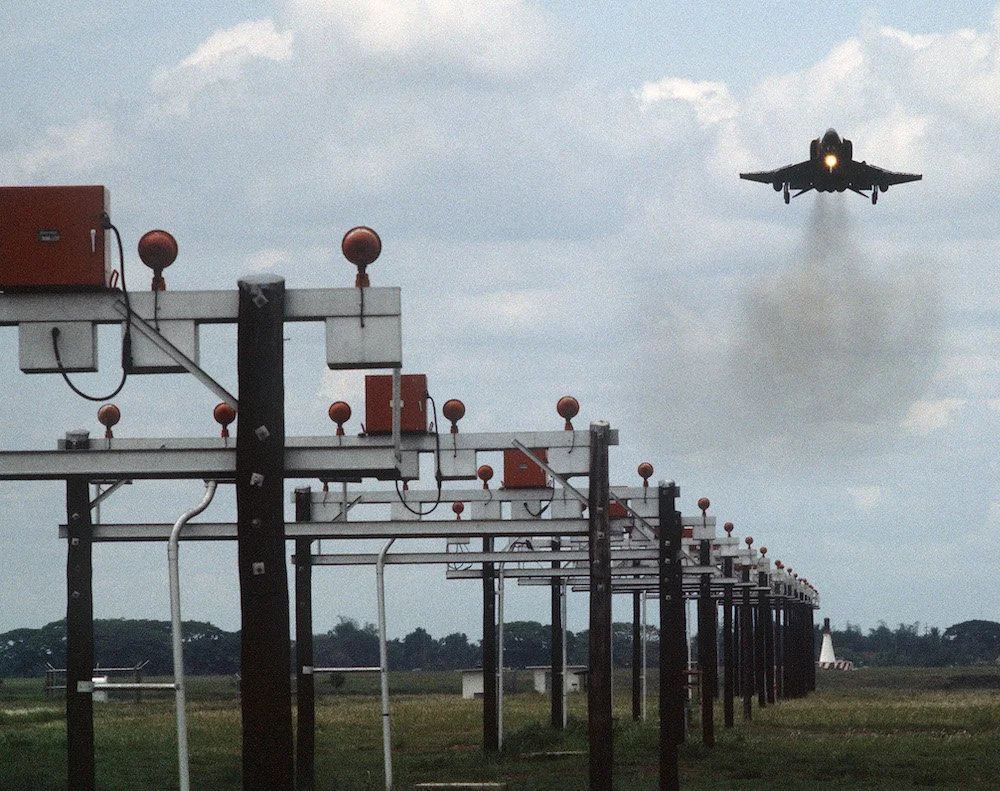
The 497th Fighter-Interceptor Squadron (FIS) had received orders to terminate operations in Europe, and transfer all our Convair F-102 Delta Dagger fighters to the Air National Guard at Boise, Idaho. The squadron would now be designated as the 497th Tactical Fighter Squadron (TFS), and would be located at George Air Force Base (AFB), in Victorville, California. Squadron pilots had the option to remain in Europe, by transferring to another F-102 squadron in Germany, or accepting a permanent change of station (PCS) to Victorville. The 8th Tactical Fighter Wing (TFW), parent Wing to the 497th TFS, at George AFB, was scheduled to receive brand new F-4C Phantom II fighters from the McDonnell factory, at St. Louis, Missouri. All pilots who transferred to the 8th TFW were to be upgraded, at Davis Monthan AFB, in Arizona. It would be their first opportunity to fly the new Phantoms as there are no F-4C aircraft assigned to the 8th TFW this time.
Flying the “Six”
Memories of the F-106 Delta Dart
by
Warren E. Thompson
(2nd Quarter 2016)
Even by today’s standard the Convair F-106 Delta Dart was one hot ship. It was nicknamed the “Ultimate Fighter,” and was operational from 1959 to 1988. A long tenure, indeed. Based on a number of personal interviews, Warren Thompson tells us what it was like to fly the “Six.” It was a fighter that was held in high esteem by almost every pilot who flew it.
Tiger Flight - Carrier Qualifications
22 July 1954
by
Roger G. Smith
(3rd Quarter 2000)
After air to air gunnery training, the next was the dessert we had all been anticipating since that voy- age on the USS Monterey back in preflight the previous autumn. The Carrier! I went to Field Carrier Landing Practice – FCLP – on 13 July 1954, flew 2 hops that day for a total of 13 practice landings. I flew 2 more hops on 15 July for 12 more landings, 11 landings on the 19th, 5 more on the 20th and was pronounced ready for the next group going to the “boat.”
“Set’em Up. White Mice”
The Combat History of the Dutch 1st Fighter Squadron (1.JaVA)
April 1939 - May 1940
by
Douglas C. Dildy, with Frans Scheve
(2nd Quarter 2005)
Tensions were high. Anxiety filled the air. Ever since the Nazi Wehrmacht launched its surprise campaign overrunning Denmark and most of Norway on 9 April 1940, every Dutch citizen was acutely aware that their own small peaceful nation might be next. Nowhere was the anxiety and tension higher than among the dozen pilots belonging to the Dutch Air Arm’s 1st Fighter Squadron – the “White Mice.”
In addition to the main article, Douglas Dildy also provides a brief biography of Thijs Postma, who when it comes to aviation art, can be described as one of the “Dutch Masters.”
A Brief History of the Boeing KC-135 Stratotanker
by
Arthur Hood
(3rd Quarter 2004)
Boeing had independently invested quite heavily to build the Boeing Model 367-80. In general, Boeing’s thinking behind the Model 367-80 was three- fold. There was a tanker aircraft for SAC – using the company’s flying boom system, a cargo aircraft for the Military Air Transport Service (MATS) and a civilian airliner. The -80 designation – soon to be called simply the Dash 80 – indicated the eightieth proposed modification of the Model 367. With some 80 design developments the Dash 80 bore no resemblance at all to the C-97, but rather looked like what was to become the 707 civil airliner and the military KC-135. However, the Dash 80 was neither a 707 nor a KC-135, it was a proof of concept project, and both airplanes, actually considered two different model aircraft, were developed from it. The Dash 80 first flew on 15 July 1954. A boom was fitted to the Dash 80, and although it was not operable it did complete several mock hookups with a B-52. On 5 August 1954, the U.S. Air Force placed an order for 29 KC- 135s. The Stratotanker and all its variants was born. On 31 August 1956, the first KC-135 lifted of the ground.
Four Star Air Cargo
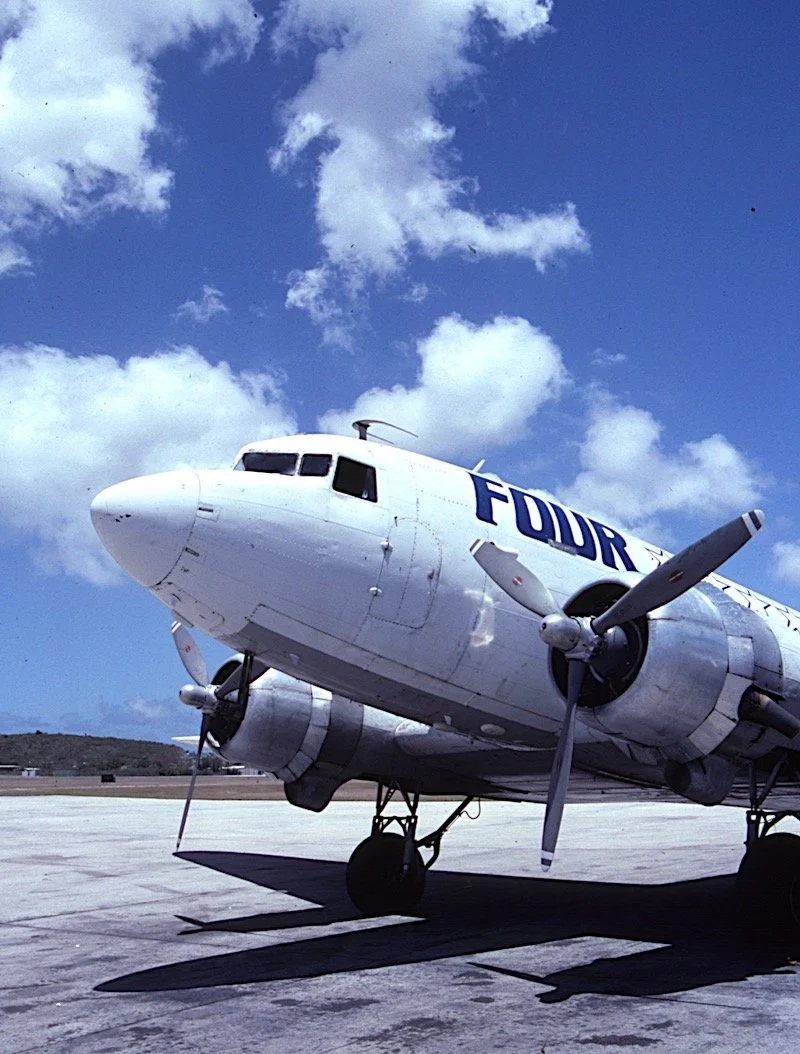
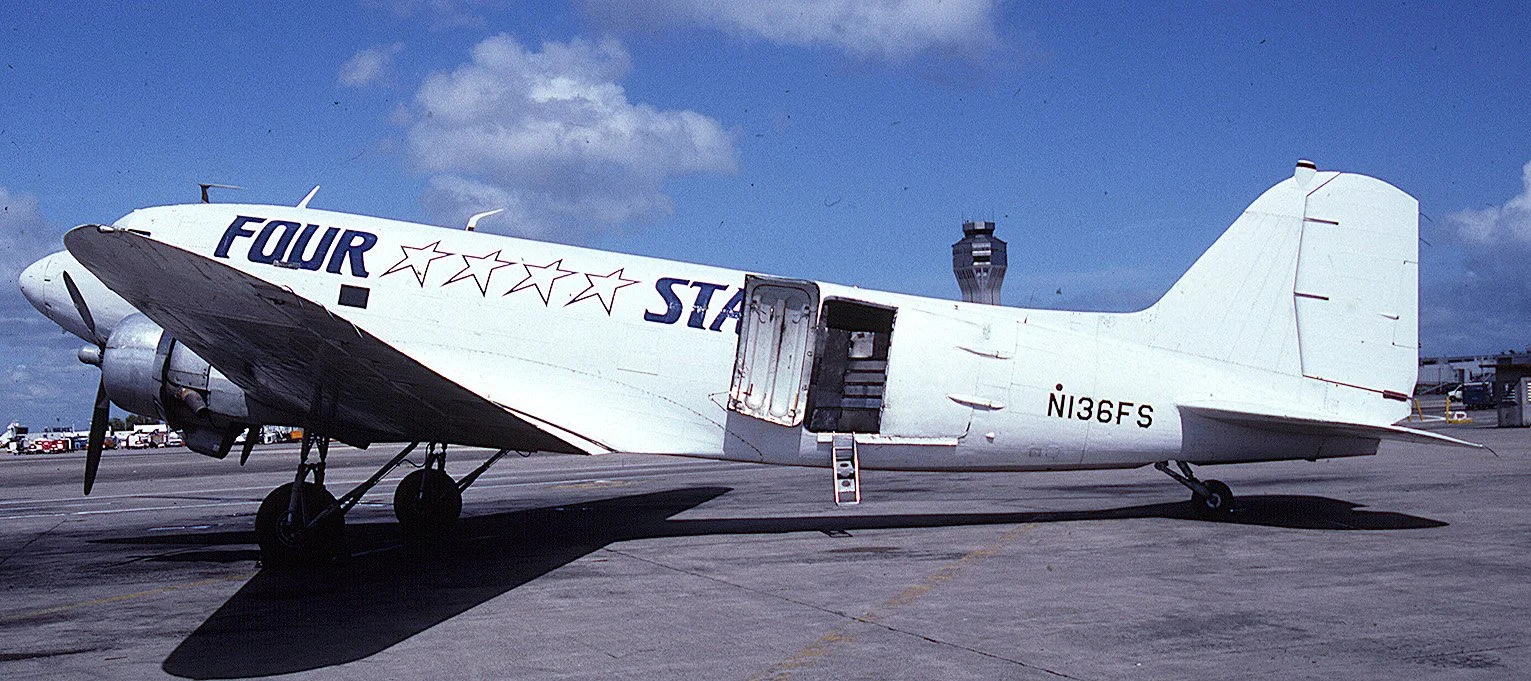
Back in the 3rd and 4th Quarters of 2000, we published as series of articles in LOGBOOK about a small company called Four Star Air Cargo. Based alternatively at St Thomas, in the U.S. Virgin Islands, and at San Juan, Puerto Rico, Four Star is most well known for operating a fleet of Douglas DC-3 freighters, flying through the clear blue skies of the Caribbean Sea and Western Atlantic Ocean. Complied by Dave Powers, your humble editor at LOGBOOK, these articles, written with the kind assistance of the Four Star staff, cover the history of the company, a typical cargo run, and a couple of scrapbooks of historic photos. Gone today, Four Star Air Cargo was a common sight around the islands. Any Four Star alumni out there? Drop us a line, we would love to chat.
Flying by Ear
A Father and Son Conversation
by
Captain Douglas H. Parrott
(3rd Quarter 2020)
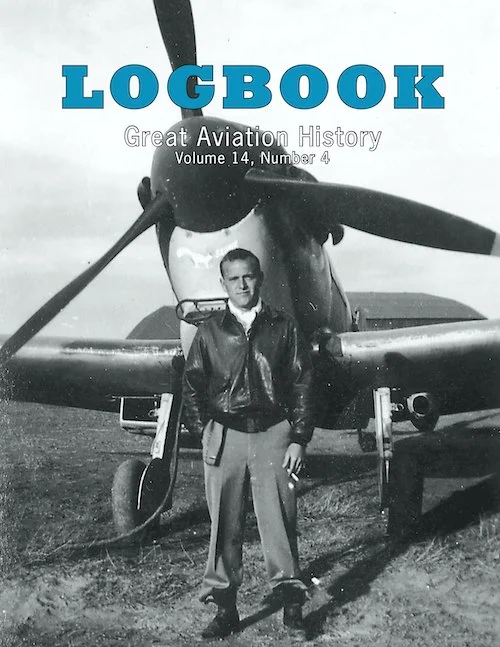
Editor’s Note: It has been almost a quarter of a century since I met Jeff Parrot, when we both showed up for our first day of Basic Indoc at a major airline, a place that would see us starting out flying the mighty NAMC YS-11, while later we both logged time flying the Douglas DC-9 and DC-8, and finally the Boeing 767. Over the years, hanging out in pilot crew rooms around the world, Jeff would occasionally tell me some of the stories that his dad Douglas, a former Naval Aviator and a long serving senior pilot at Northwest Airlines, had told him. I loved listening to these stories, and pestered Jeff mercilessly to get his dad to write some of these tales down. I am happy to present here a conversation between father and son - this is great aviation history.
Thanks very much Captains Douglas and Jeff Parrott.
A Pilot Called “Moose”
by
Herb Kugel
(3rd Quarter 2012)
Robert Carl ‘Moose’ Fumerton was a hefty, six-foot plus, ice hockey playing woodsman. He became Canada’s top World War Two night-fighter ace. He earned his ‘Moose’ nickname because he regularly had to shove and squeeze his large body into the cockpit of any fighter he flew. However, once in the cockpit, Fumerton regularly showed himself to be an aggressive and skillful pilot.
The Ghost Of The Drifter’s Reef
by
Major Grover C. Tate, Jr.
77th Troop Carrier Squadron
Carswell Air Force Base, Texas
(The MAC FLYER, January 1966/LOGBOOK 4th Quarter 2021)
Bunny Power
U.S. Navy Evaluation Squadron FOUR (VX-4),
and Its All Black Flagship -Vandy One
by
David G. Powers
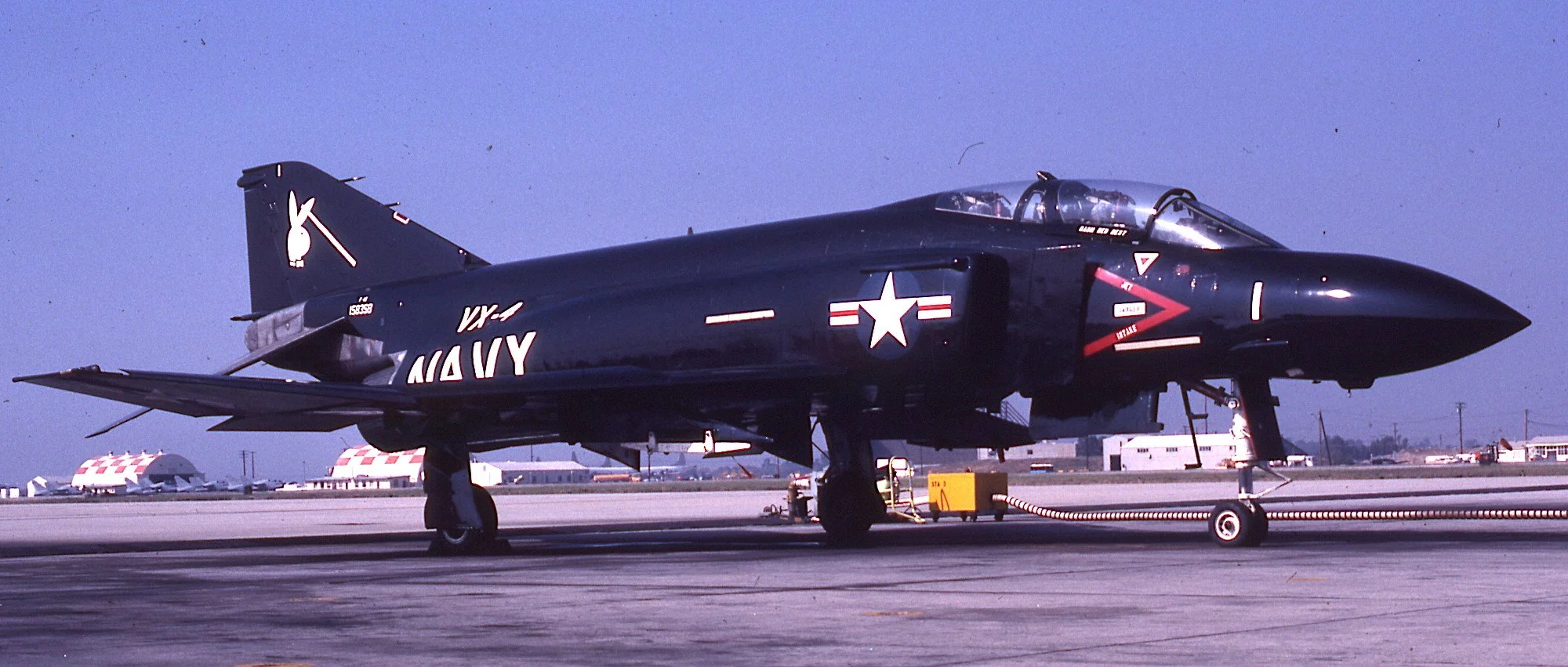
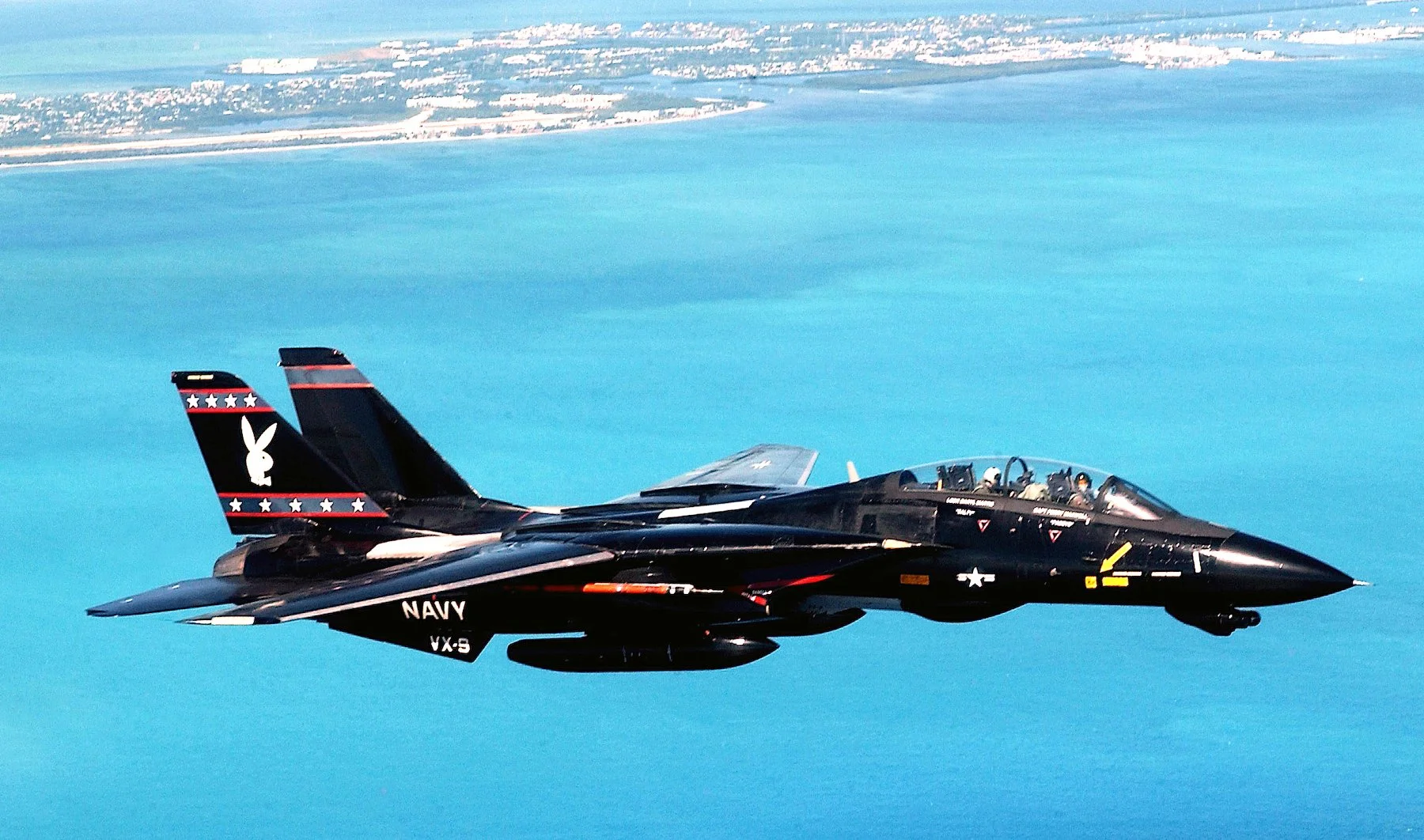
An introduction from the editors of The Aviation Historian: In our first issue we told the full story of Hugh Hefner’s midnight-black DC-9, emblazoned with the distinctive rabbit’s-head logo of his Playboy empire. It was, however, not the only jet to wear the bowtied bunny. DAVID G. POWERS explores the history of US Navy squadron VX-4, whose all-black bunny finned F-4 Phantoms and F-14 Tomcats became, with Hef’s blessing, icons of West Coast US Navy aviation
This article originally appeared in Volume 14 of The Aviation Historian, a premier aviation history magazine published in the United Kingdom. Still in publication, The Aviation Historian can be reached at:
https://www.theaviationhistorian.com/index.htm
Copyright: The Aviation Historian/David G. Powers, 2017
Both Photos: U.S. Navy
VT-27 and T-28 Trojans
by
James Stevens
2nd Quarter 2021
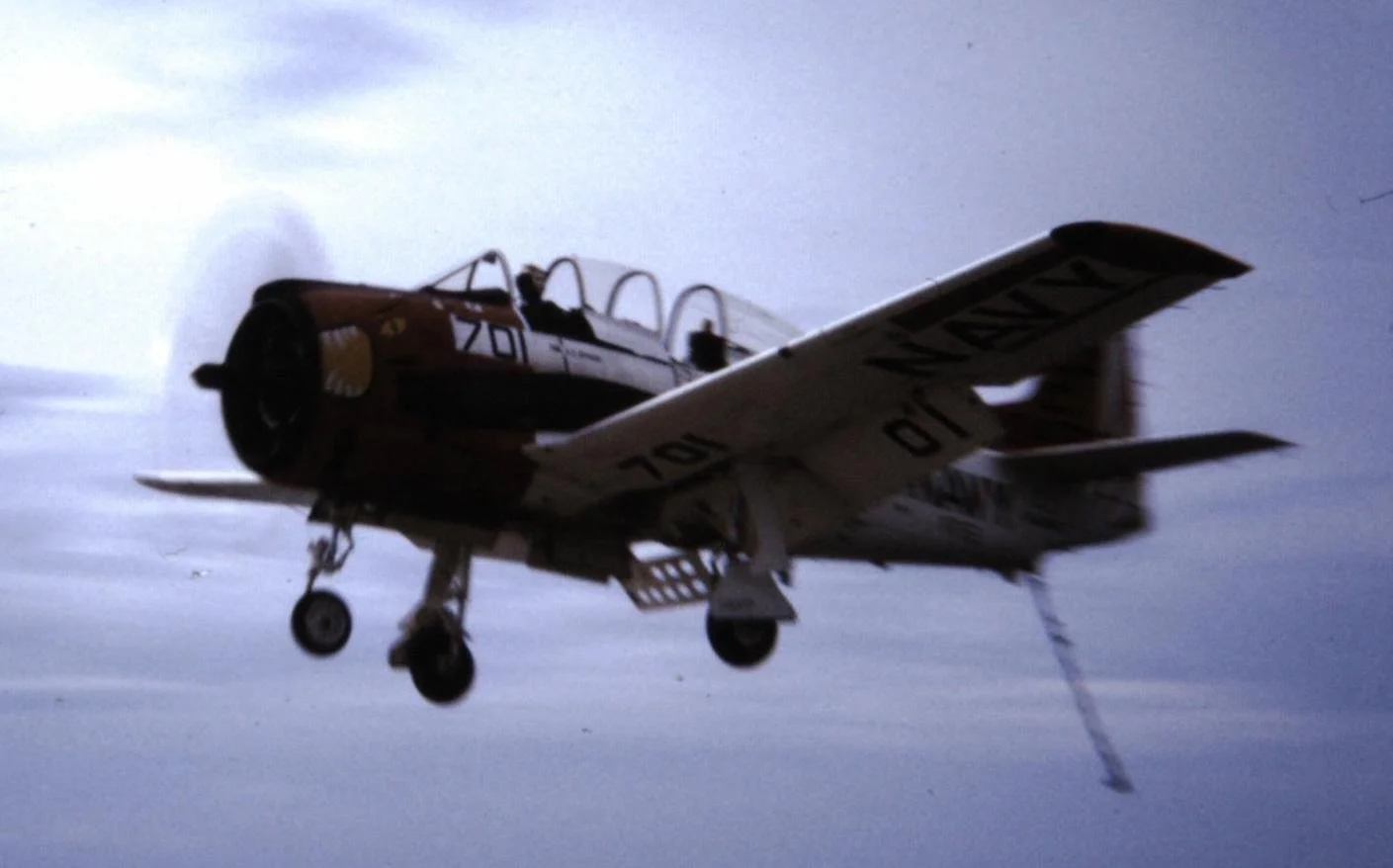
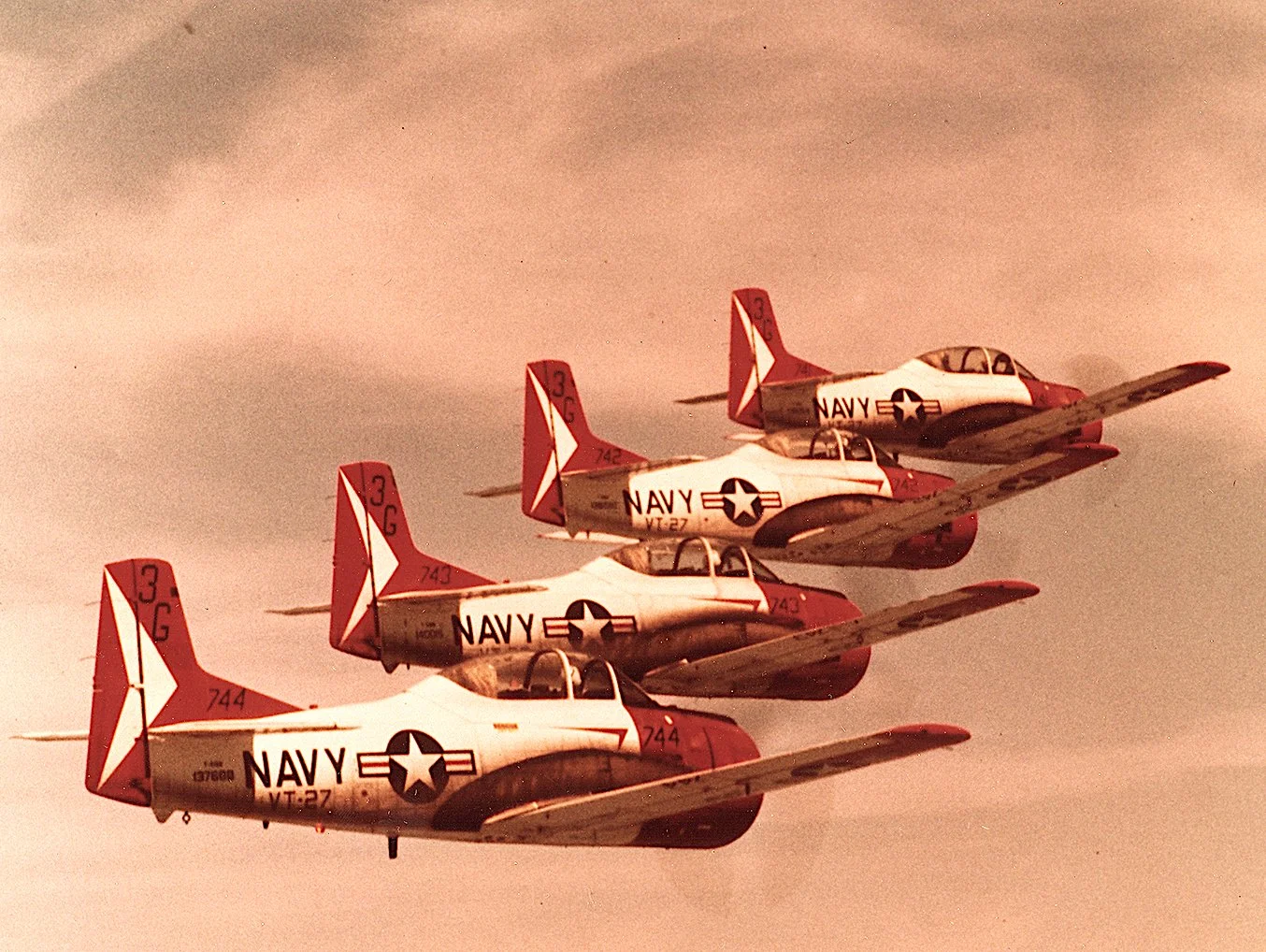
An article written by Dave Powers, was the inspiration for this writing. He described what was the End of an Era. I will focus on the early part of that era. I will explain how I got into Naval Aviation, some of my training, the squadrons involved, and changes culminating in the transition of Training Squadron TWENTY-SEVEN (VT-27), stationed at Naval Air Station (NAS) Corpus Christi, Texas from the twin engine Grumman TS-2A Tracker to the North American T-28 Trojan. My discussion is primarily about T-28 training around 1973 to 1974. During these years, the role of the T-28 relative to the Naval Air Training Command, and the aircraft’s future were under serious review. This is a brief recollection from one who lived that adventure.
Mission to the Northwest Highway
by
R. L. Penn
(1st Quarter 2008)
In most respects it was a typical Route Package VI mission except that we had no electronic warning equipment and it was night. Even those differences were routine to me. My squadron got electronic warning gear after I had left, and I had long ago grown accustomed to night missions. Of four men on that mission, three did not survive the Vietnam War.
Our relentless presence in the daytime had caused the Vietnamese trucks to do much more driving at night. Higher HQ decided to assign two fighter squadrons for operations primarily at night. The 497th and 433rd Tactical Fighter Squadrons (TFS) at Ubon, Thailand got the odious task. I flew F-4 Phantom IIs in the 497th TFS, and this mission to Route Package VI was my last flight in country.